
You open a campaign and see “Limited by budget” beside its status. Nearly everyone has the same first reaction: increase the daily budget. Sometimes that is exactly right. More often, it is the most expensive possible response.
What this status really means
The status tells you one thing: demand for your ads exceeds what the daily budget can cover. The campaign could have entered more auctions, but today’s available funds have run out. In the reporting columns, this appears as Search lost IS (budget), or lost impression share due to budget.
What the status does not tell you is whether that missed demand was valuable. A campaign reaches the same ceiling when it misses high-intent commercial searches and when it spends all day on irrelevant traffic. The label is identical, but the correct decisions are opposites.
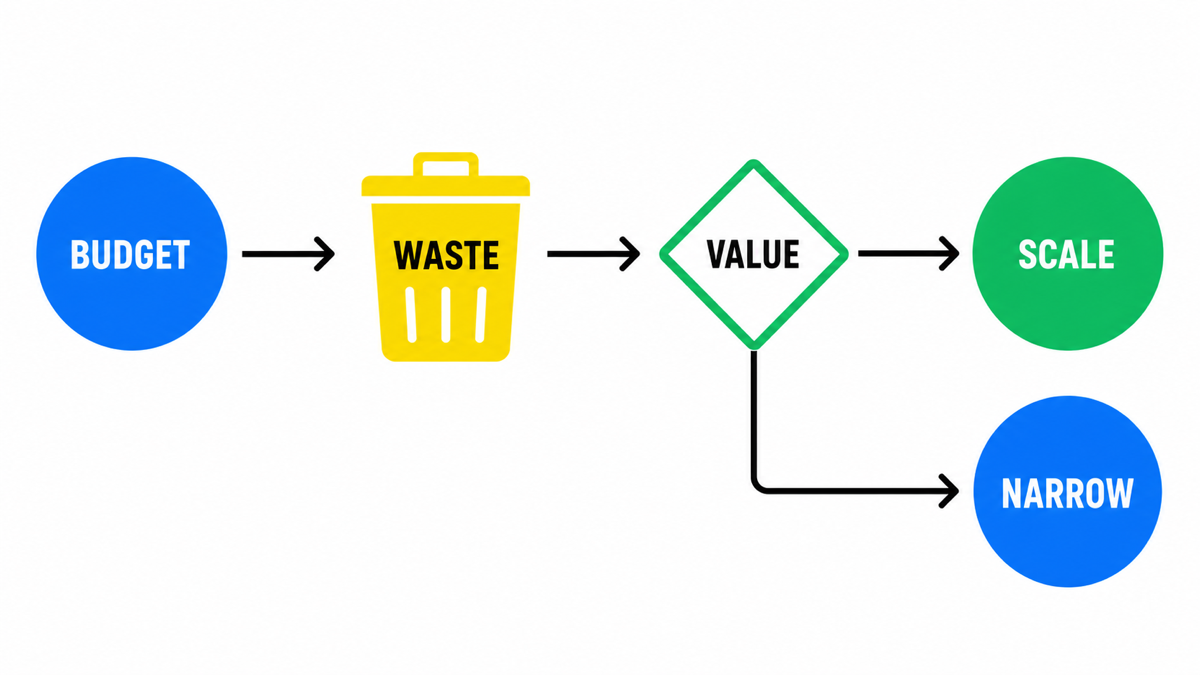
What to check before raising the budget
- The Search terms report. If the highest-spending rows contain searches you never wanted to target, a larger budget will only accelerate the waste. Add negative keywords first.
- Cost per conversion over the last 30 days. If it already exceeds your break-even point, a larger budget will increase the loss rather than the profit.
- Locations and ad schedule. Budgets often disappear in areas you do not serve or overnight, when nobody is available to respond to a lead.
- Whether brand and non-brand traffic share one campaign. Brand searches are inexpensive and usually convert well, so they can distort the status while the rest of the campaign is starved of budget.
If all four checks are clean and the campaign is still limited by budget, increasing the budget becomes a sensible growth decision instead of a shortcut around diagnosis.
My e-book “19 Google Ads Secrets”: how to get the most out of Google Ads without draining your budget, drawn from real campaigns and tests.
See the book →What changes on August 17, 2026
This matters most for advertisers whose campaigns have carried the status for years. Google announced that from August 17, 2026, budget-limited campaigns using target-based bidding will move more consistently toward the specified target, including when budgets change.
Previously, a budget-constrained campaign could deliver results better than its own target, and the advertiser would grow accustomed to that actual number. After August 17, these campaigns will move closer to the target. If you entered a generous target as a safety margin while actual leads came in more cheaply, that advantage may disappear. Review the value in the target field now.
Frequently asked questions
How much should I raise the budget after clean checks
Increase it in steps, not by several times at once. A sharp rise changes the conditions for the algorithm, so the first few days do not provide a reliable comparison. Raise the limit, then review cost per conversion after one or two lead cycles rather than the next morning.
Can I remove the status without spending more
Yes, and that is often the better option. Narrow what you pay for by adding negative keywords, tightening location targeting, and separating brand from non-brand searches. Available demand then falls to a level the existing budget can support.