Winning more photo shoot bookings starts with understanding how a client moves from a vague idea to a specific choice. Each stage calls for a different message and advertising channel.
Marketing for photographers
Demand for a photographer often begins with an important event such as a birth, wedding, graduation, or business update. Until someone is considering a photo shoot, even a strong portfolio is unlikely to produce an immediate booking.
Once the need is real, the search often develops in three stages:
- The person looks for ideas, types of photo shoots, preparation advice, or portrait tips.
- Next, the person researches studios and locations.
- Finally, the search becomes commercial, such as “photographer + city + price,” “book photographer + location,” or “wedding photographer + city.”
Your ads should reflect that stage instead of presenting the same offer to everyone.
Search advertising for photographers
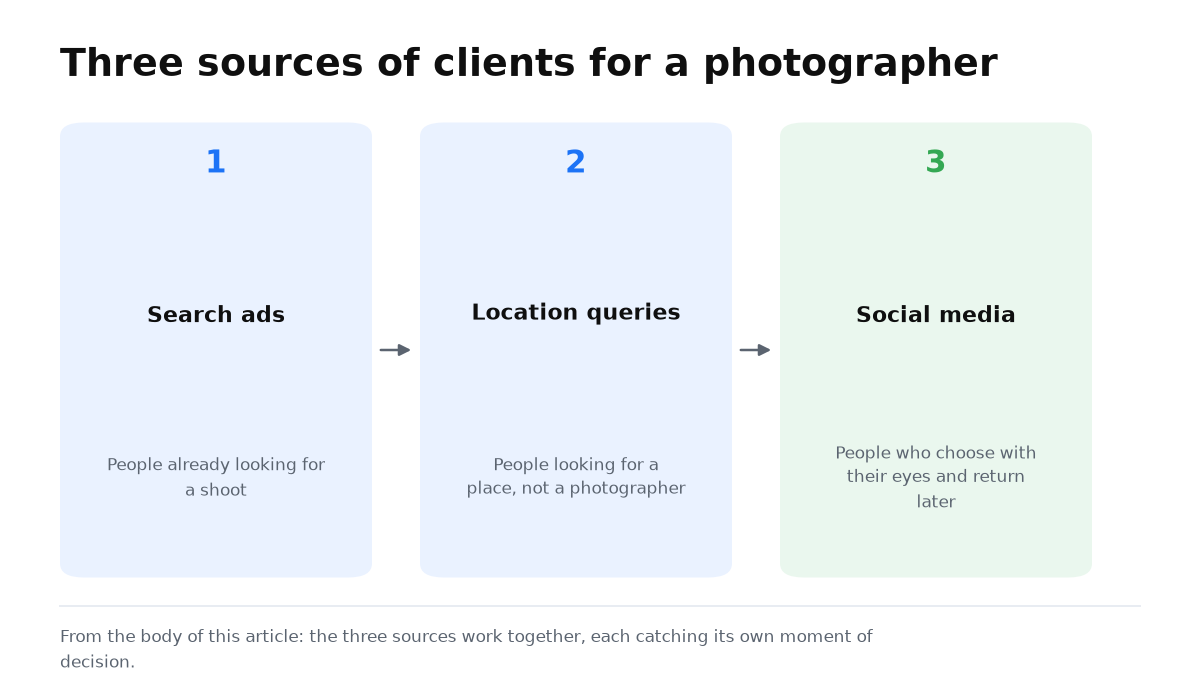
The most obvious channel is Google Search for phrases such as “photographer prices,” “book a photographer,” and “photo shoot price.” Separate groups can cover newborn, team, wedding, birthday, business, and portrait photography.
Almost every photographer can use these searches, so competition is intense in major cities. An established studio with a persuasive landing page may turn expensive clicks into bookings. A beginner often pays for the same traffic but loses the visitor because a small portfolio and limited track record do not build enough trust.
How to prepare your website for ads
The landing page should answer the client’s practical questions and make the choice feel safe.
- What equipment you use.
- For weddings, whether you provide photography, video, and two camera coverage.
- What production support is included.
- For newborn sessions, whether you travel to the client.
- Which locations your studio offers.
- What it is like to work with you.
- A high quality portfolio that demonstrates your style, experience, and standard of work.
When the page answers these questions and the portfolio proves the promise, a search click has a credible path to becoming a booking.
My e-book “19 Google Ads Secrets”: how to get the most out of Google Ads without draining your budget, drawn from real campaigns and tests.
See the book →How a photographer can stand out
The client is not paying only for camera operation, retouching, and digital files. The real value may be confidence in front of the lens, an emotional record of an event, or a business portrait that changes how other people see them. Explain that outcome in the ad and on the website.
A useful message is specific: “I will help your personality come through in the images and focus on how you want to feel. You will receive more than photographs. You will receive a distinctive image and the emotion behind it.”
- Parents can return to the feelings surrounding a child’s birth.
- A couple can preserve the atmosphere of their wedding day.
- A business portrait can help an audience trust the person as a capable professional.
How to reach people who are researching locations
Google Ads can build audiences around people who visit studio pages and location guides, are preparing for a wedding or birth, have shown interest in a photo shoot during the previous 14 days, or search for places to hold a session.
Show these audiences YouTube ads or Display ads featuring the portfolio. This initial contact is usually cheaper than competitive search traffic. Then group people who have seen the work or video into a remarketing audience and strengthen search advertising for them.
- This may be only about 10% of the wider audience, so you can focus stronger bids on the smaller group.
- They already recognise the photographer and are closer to a decision, so their visits are more likely to become bookings.
The role of social media
Instagram suits visual discovery and helps people become familiar with a photographer’s style. Reactions, comments, and reviews reveal which work resonates most. Portfolios can also be shared on Facebook and LinkedIn, along with a special offer or a call for models.
Competitions, exhibitions, and reports from those events strengthen a personal brand. The better a prospect knows the photographer before searching, the easier it is for advertising to turn interest into a booking.
When this does not apply
- Search ads cannot compensate for a weak page without clear answers, a convincing portfolio, or a specific offer.
- Ads shown before a need exists rarely generate an immediate booking. Their first job is to introduce the photographer’s style.
- Display and remarketing campaigns should not treat every audience as if it had the same intent.
Search is only the visible part of photographer marketing. Introduce the work through YouTube, Display, and social platforms, then use stronger search bids for the warm audience. Keep improving the landing page because it completes the path from interest to booking.