
Selling sports nutrition, apparel, equipment, and exercise machines starts with the buyer’s motivation. An experienced athlete and someone who has just decided to get fit want different outcomes, so they need different messages, products, and advertising channels.
How to identify the target audience for sporting goods
Potential buyers of sports apparel, nutrition, and equipment generally fall into two groups:
- people who look after their health and exercise regularly;
- people who have recently decided to improve their health, lose weight, or start exercising.
The same ad will not persuade both groups equally well. Segment the audience first, then choose the arguments that matter to each segment.
How to segment the audience and identify active people
Surveys, interactive quizzes, and tests can help you segment an audience. Treat a quiz as a separate funnel with its own economics instead of comparing it with a Search campaign only by cost per lead.
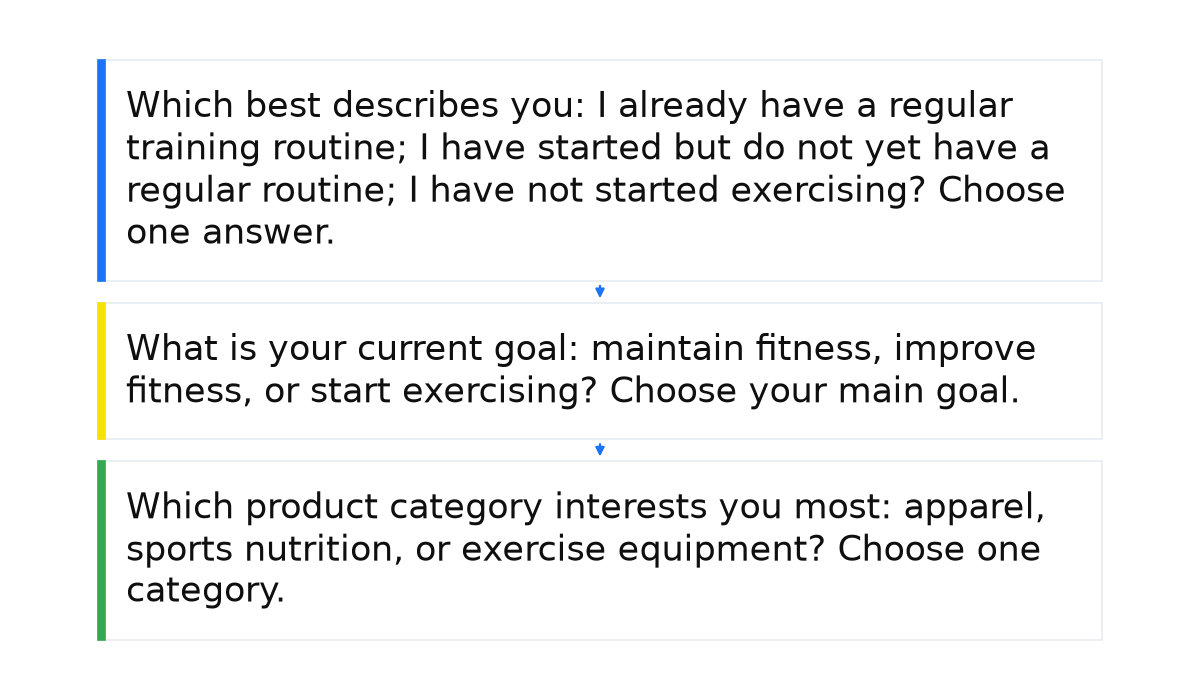
For a store, a quiz can ask about training experience and shopping needs. For example, ask the following questions:
- Which best describes you: I already have a regular training routine; I have started but do not yet have a regular routine; I have not started exercising? Choose one answer.
- What is your current goal: maintain fitness, improve fitness, or start exercising? Choose your main goal.
- Which product category interests you most: apparel, sports nutrition, or exercise equipment? Choose one category.
Use the first answer to assign the segment. Use the goal and product category to choose content within that segment. These answers describe shopping interests and experience; they do not assess cardiovascular health.
Apply this rule to the first answer:
- Regular exercisers. Anyone who selects an existing regular training routine goes into this segment.
- Beginners. Anyone who has started exercising but has no regular routine goes into this segment.
- Planning to start. Anyone who has not started exercising goes into this segment. This answer says nothing about their health.
At the end of the quiz, show the segment and invite the person to receive product selection guides by email, matched to their goal and preferred category. If they skip the first question, leave the segment unassigned.
How to communicate with different audience segments
Create a separate email sequence for each group. The difference becomes clear when promoting a fitness tracker.
How I keep ads aligned with inventory
I start advertising a product range by checking which options customers can actually buy now. I separate consistently available items, temporarily unavailable products, and offers with incomplete data, then connect advertising priorities to that status. It is especially important not to send a shopper to a product page that lists the model but lacks the required variation, or where the purchase terms differ from the ad.
Google lists its expectations for accurate and complete product pages in the Merchant Center editorial and technical requirements.
Content that can sell sports equipment to experienced athletes
For customers who already exercise regularly, explain how the specific tracker can support their workouts. Check that the model supports each advertised feature:
- monitor heart rate while running;
- run at a low heart rate;
- calculate the distance of a run;
- measure total distance traveled during the day;
- determine average running speed;
- estimate blood oxygen saturation if the model supports SpO2 measurement; do not present this reading as a way to identify an aerobic or anaerobic training zone.
Useful topics for sports footwear and apparel campaigns include:
- how to choose the right Nike shoes for training;
- what to wear when running to support a weight loss goal.
Turn these topics into short, useful articles and email them to fit and active customers at regular intervals.
Ad messages for people who are just starting to exercise
Present the same fitness tracker to beginners through its health and weight management benefits. The message can highlight that:
- the device estimates calories burned using walking speed, distance, and heart rate;
- the tracker measures heart rate periodically, letting the user observe changes in real time;
- the device measures sleep quality, while a food diary can help the user analyze which foods are associated with better sleep;
- the tracker helps the user monitor weight loss and improvements in physical fitness.
For an online sports nutrition store, create content about vitamins and trace elements athletes often lack, how different supplements are used and combined, and what supports muscle growth.
If you want to turn these segments into focused campaigns and messages, begin with a review of your audiences, product range, and current advertising setup.
My e-book “19 Google Ads Secrets”: how to get the most out of Google Ads without draining your budget, drawn from real campaigns and tests.
See the book →The effect of remarketing and promotional emails
Useful emails maintain contact with a potential customer until they buy a sporting product. In practice, a sporting goods business usually needs 6 to 10 interactions between the first contact and the purchase.
Remarketing works well on YouTube and the Google Display Network. When promoting complex gear and equipment, let the visitor request a consultation and link to a page with a form. A customer is unlikely to buy equipment for an extreme sport without comprehensive information and instructions from a specialist.
Which Google Ads formats suit a sporting goods store
Google Ads formats support different jobs across the sporting goods buying journey:
- ads on the Google Display Network usually appear as banners, so they need strong photos, engaging headlines, and clear product descriptions;
- Google Search ads show text when someone searches for a product or a closely related category;
- a product ad served through Shopping or Performance Max with a feed shows a product, price, and image; its link must lead to that specific product’s detail page, as required by Merchant Center’s landing page rules;
- YouTube video advertising can demonstrate how to use an exercise machine or another piece of sports equipment, including its benefits and modes.
If the budget is limited, concentrate on the most competitive and conversion focused products in the niche. An automated bidding strategy can help improve revenue from Shopping campaigns.
Useful targeting options for sporting goods ads include:
- remarketing audiences;
- young and middle aged people with active lifestyles;
- audiences with interests and searches related to sports and sporting goods;
- people who buy related and similar products;
- visitors to sports related websites.
Sports marketing on social media
Social media works well for promoting sportswear and nutrition. An online store can build its brand on Instagram, TikTok, Facebook, YouTube, and Telegram. Adapt the creative to the age and interests of the audience on each platform.
Use a mix of formats to increase sporting goods sales:
- film interesting videos about training and competitions;
- publish content about exercise machines, sports gear, and equipment accessories;
- offer consultations;
- create attractive discounts and promotions;
- combine sales messages with useful and entertaining content to increase visits to the account or channel;
- watch trends and competitors because online behavior changes quickly;
- invite well known athletes, feature team achievements, and collaborate with creators;
- encourage customers to create photos and videos featuring the brand’s products.
Personal experiences, reviews, and comments under posts strengthen trust in the store. That requires consistent interaction with customers and followers.
Sporting goods ad copy examples
These are starting points for Search ad copy, not complete ads. Each example has two headlines and one description; before launch, expand it to at least three headlines and two descriptions, as required for responsive search ads, and add the final URL. Use only claims that match your products and delivery terms. Keep footwear, sports nutrition, and home exercise equipment in separate ad groups.
- Running shoes
Headline 1: Running Shoes
Headline 2: A Lightweight Fit
Description: Find a pair for training, the gym, and everyday walking. - Sports nutrition
Headline 1: Sports Nutrition to Start
Headline 2: Nutrition for Your Goal
Description: Protein, vitamins, and shakers for gaining muscle or losing weight. - Home exercise equipment
Headline 1: Exercise Equipment at Home
Headline 2: A Gym in Your Apartment
Description: Benches, dumbbells, and cardio equipment with local delivery.
Conclusions about advertising sporting goods
Before opening a sporting goods store, study the niche and develop a marketing strategy. Check:
- which products and categories are in demand;
- current market prices;
- how to promote seasonal products;
- which traffic channels to use;
- which advertising tools and target audiences are most effective;
- what you can learn from case studies and other sellers’ experience.
After launch, monitor cost per click, CTR, and conversions. Regular analysis helps improve the advertising, increase reach and average order value, and reduce spending.
What next?
When this does not apply
- Shopping and the product driven part of Performance Max do not work without Merchant Center, a current feed, and approved products.
- One campaign for the entire range hides differences in margin, seasonality, and purchase intent.
- Strong advertising returns are not assured when prices, availability, and delivery details on the site do not match the feed.