
Your clothing store’s advertising should reflect what you sell: one brand with a distinct style, or a broad selection of different labels. With one brand, you need to find people who like your designs. With several brands, you need to explain why shoppers should choose your store over others selling similar products.
What makes clothing advertising different
People choosing clothes first want to see how an item looks and whether it comes in their size. Technical specifications may drive a decision about equipment, but a dress or coat needs to be seen.
That makes display ads and Google Shopping useful formats to test early. They show the product itself, while a text search ad cannot provide the same visual impression. The same reasoning supports testing Instagram, YouTube and Facebook for women’s and men’s clothing: these platforms let you present the offer through photos or video.
How to promote a store selling one clothing brand
Suppose you own a clothing label or sell only one other brand. Your range is limited. Someone searching for a “gray coat” may want to compare many designs from several brands, so that search does not necessarily identify your ideal customer. People who already know the brand or have shown interest in its style are especially valuable for this approach.
How I group products for advertising
I group products by the attributes shoppers actually use to narrow their choices: intended use, season, material and availability of the version they want. The store’s internal catalog structure does not always match that process. I then check whether the product title in the feed answers the same customer need as the image and price. I do not leave a product as bait when its availability is out of date, even if it attracts search interest.
Google’s Shopping ads guide explains how feed data relates to ad delivery. To promote the brand itself through Google Ads, test the following sequence.
1. Start with Google Display Network ads
A display ad featuring your clothing can introduce shoppers to the store. This gives you a way to:
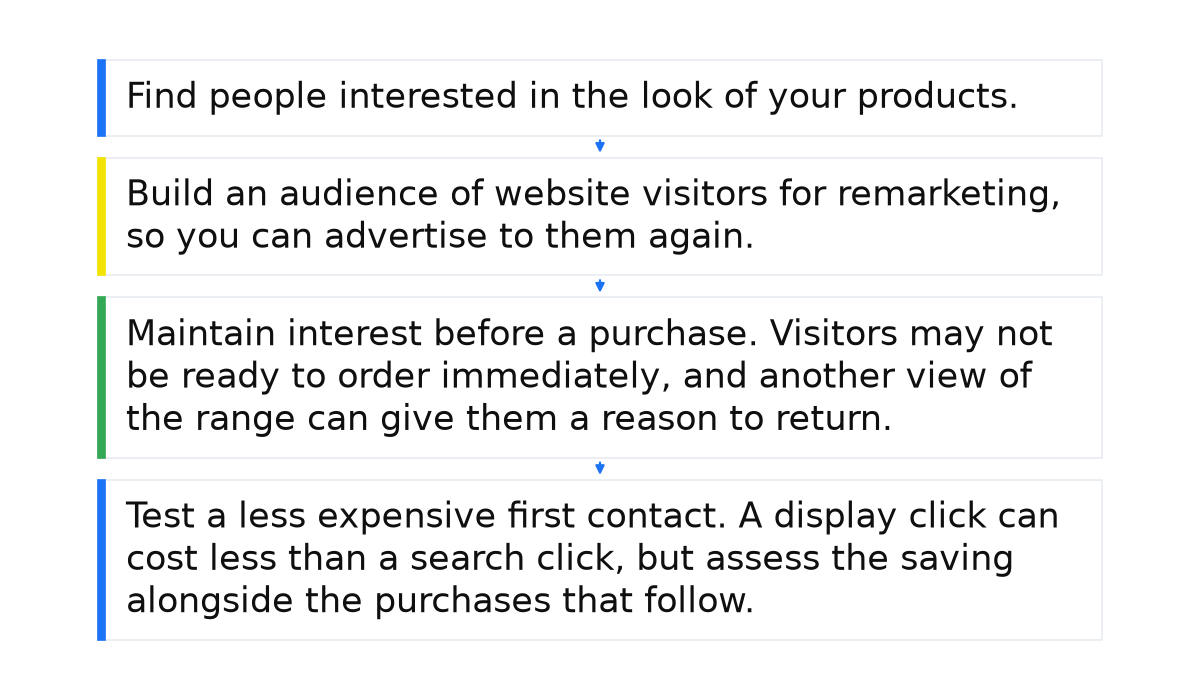
- Find people interested in the look of your products. A click on the banner indicates initial interest in the offer shown.
- Build an audience of website visitors for remarketing, so you can advertise to them again. The maximum membership duration for website visitor segments in Search and Display is 540 days. Choose a duration based on how long the offer remains relevant to the shopper. See Google’s guide to your data segments for details.
- Maintain interest before a purchase. Visitors may not be ready to order immediately, and another view of the range can give them a reason to return.
- Test a less expensive first contact. A display click can cost less than a search click, but assess the saving alongside the purchases that follow.
2. Add search ads for previous visitors
Once you have a large enough audience interested in your range, test search advertising specifically for those visitors. You can use more general search themes, such as “buy a dress,” instead of limiting the campaign to a brand name or individual style.
This approach offers two advantages:
- You reach people who have already interacted with the store and shown interest in its clothing.
- You can focus the budget on that group and test higher bids when purchase results justify them. Your advertising specialist’s job is to select relevant keywords and put the offer in front of these shoppers when they search again.
Consider a hypothetical example: 1,000 people search for clothing, but only 100 like your range. Spreading the same budget across everyone limits what you can spend to reach each person. Focusing on the 100 interested shoppers lets you spend more on reaching them. That explains the logic of the approach; actual purchases will show whether it pays off.
3. Expand into other advertising channels
Continue reaching interested visitors on other platforms. For YouTube, make useful videos about the clothing people can buy from you:
- How to combine items into outfits.
- Which seasonal trends to consider when choosing clothes.
- How to choose designs for different body types, ages and personal styles.
Add dynamic remarketing to bring visitors back with ads for the specific items they viewed in your catalog. The next contact then relates directly to something they have already considered.
How to advertise a store selling multiple brands
If you carry several brands and are happy for customers to choose any of them, the challenge changes. You compete with other clothing stores, large marketplaces and price comparison sites. Many sellers offer similar products, so your advertising needs to explain the advantage of buying from you.
Reasons to choose your store might include:
- A broad selection that makes it easy to compare different options in one place.
- Help with sizing. Letting a customer enter their usual size and find the equivalent for a particular brand can reduce confusion when size charts differ between labels.
- Discounts, promotions, convenient payment options, delivery, guarantees and a clear returns process.
Put those advantages directly in your ads. A YouTube video can explain in more detail what makes buying from your store convenient. You can also continue reaching viewers through audiences for search and Shopping ads, testing whether higher bids are justified.
A store selling several brands can test a direct purchase offer through Google Shopping. Shoppers immediately see the product image, title and price. Combine Shopping with:
- Dynamic Search Ads. Google selects a store page and generates a headline based on the search and website content, while the advertiser supplies the description.
- Dynamic remarketing, which reminds visitors of a specific item as they browse other websites and platforms.
The sequence used for a single brand is also worth testing here: introduce the store through display ads or video, then advertise to those visitors again. Compare their purchase results with those of shoppers who arrive through a direct Shopping offer.
Other ways to promote a clothing store
Your website needs to help turn advertising interest into orders. Check that it meets these basic requirements:
- Fast loading and clear navigation.
- A straightforward buying process, with working cart and checkout forms, online payment, a way to contact an adviser and current prices.
- Optimization for organic Google search.
- A usable experience across different devices.
Other channels can help you attract customers and bring them back:
- SMS and email campaigns with relevant messages for each audience about promotions, sales, new collections and brands.
- A presence and advertising on Google Maps if you have a physical store. Prepare your contact details, opening hours, address and photos.
- Promotion on Instagram, Facebook, Telegram and TikTok. Match the audience and content to the clothing you sell.
For a physical store, traditional formats can also support customer acquisition and retention:
- Business cards and other printed materials with a recognizable design.
- Outdoor advertising on billboards, public transport and near the store entrance.
- A loyalty program that encourages repeat purchases.
What matters in clothing store advertising
Test search and Shopping ads with people who have already watched your videos or clicked your display ads. They know something about your range, so the next ad continues an existing interaction.
Reach will be narrower, but you can concentrate spending on interested visitors. If their purchases justify a higher bid, you can compete more actively for an impression. For a store selling multiple brands, also test direct sales through Shopping ads.
When this does not apply: the remarketing sequence cannot provide enough reach if you have not built a sufficient visitor audience. A click on an attractive banner does not guarantee a purchase either. If the desired item or size is unavailable, or ordering is difficult, a higher bid will not solve the problem.
Start with the approach that fits your range: introduce shoppers to one brand or help them choose among several. My e-book below explains how to get the most out of Google Ads without draining your budget.
My e-book “19 Google Ads Secrets”: how to get the most out of Google Ads without draining your budget, drawn from real campaigns and tests.
See the book →