
Definitive Traffic Seminar took place in Chicago, US, on May 23-25, 2023, as an in-person conference. The session was presented by Igor Ivitskiy.
“How Google’s AI Works Internally” connected three questions that sit behind campaign performance: which conversion signal teaches the system, how AI interprets audience context, and how apparently successful optimization can amplify bots or unqualified leads. It placed those questions beyond routine keyword research for Google Ads and inside the feedback loop that guides automated campaigns.
Google AI follows the feedback it receives
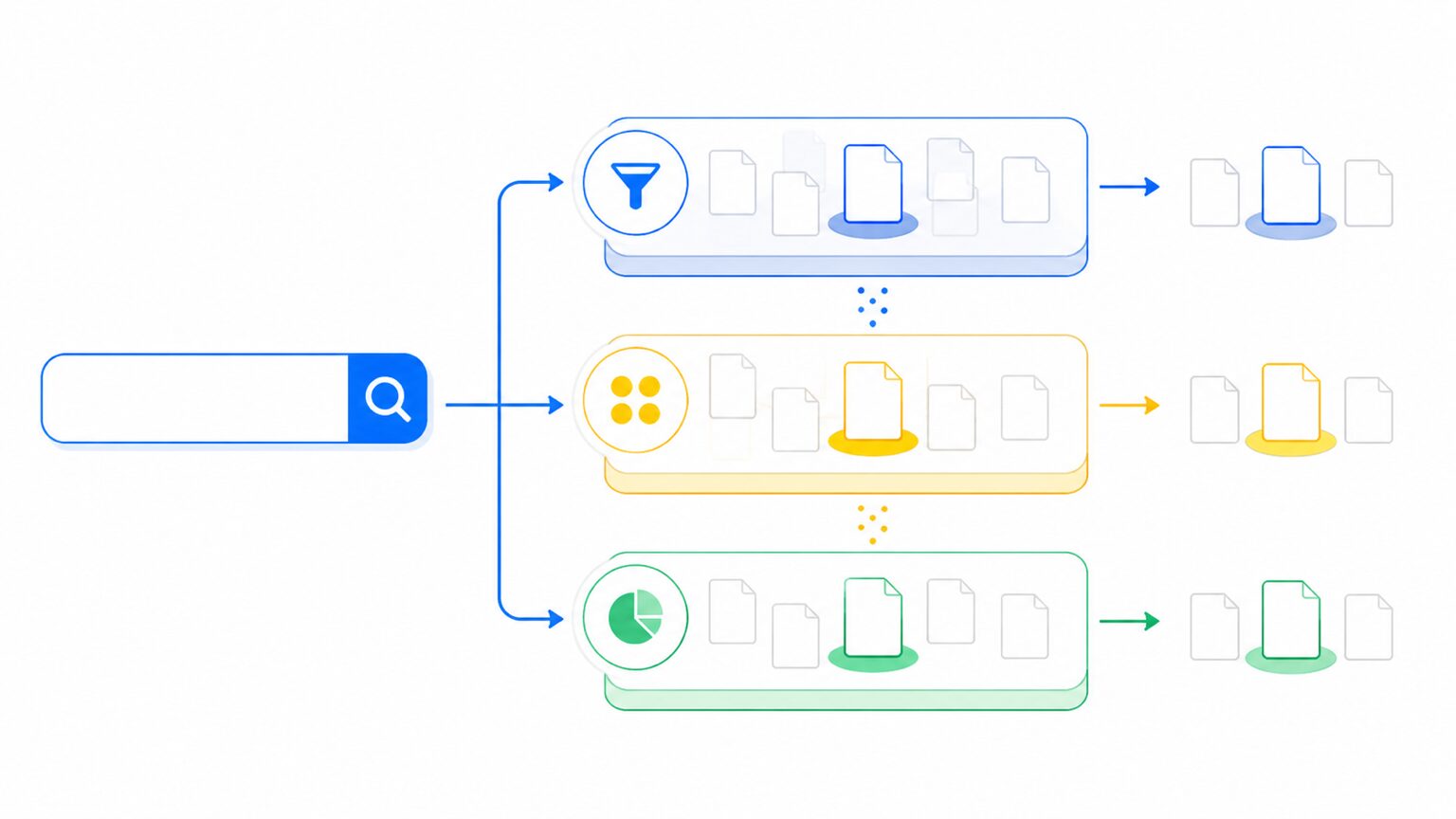
Igor’s core analogy came from his earlier research on non-Newtonian fluids. Both the experimental medium and an advertising market are dynamic, unpredictable and time-dependent. A delayed or sparse measurement can describe a state that has already changed. In an automated campaign, the conversion signal plays the role of that measurement.
That signal has three competing qualities: it should arrive close enough to the ad interaction, occur often enough for the system to distinguish a pattern from noise, and represent something that matters to the business. The hard part is that the fastest and most frequent event is often weaker than a qualified lead or a payment.
Automation therefore does not remove judgment. It moves judgment upstream, into the choice and interpretation of data. The same principle applies when campaigns use wider reach, including broad-match keywords: more freedom for the system makes the quality of the feedback loop more important.
The system needs feedback that is timely, repeatable and connected to business value.
Clear semantic signals help AI identify people whose interests or recent intent fit the offer.
Bots and accidental form fills can teach the system to find more of the wrong outcome.
The metric is not the objective
I treat every conversion action as a teaching signal. If the action is fast and frequent but has no commercial meaning, better optimization can move the campaign further away from the business result.
This way of thinking is useful beyond one campaign type: it gives marketers a framework for questioning what an automated account is actually learning. Our school returns to that strategic layer in its training, while the talk recording preserves the detailed examples and mechanics.
My e-book “19 Google Ads Secrets”: how to get the most out of Google Ads without draining your budget, drawn from real campaigns and tests.
See the book →Key insights
- AI optimizes the signal, not the advertiser’s unspoken intent. If a weak action is counted as success, the system can become very efficient at finding more weak actions.
- Speed, volume and value form one decision. Maximizing only one side of the triangle can produce delayed learning, noisy conclusions or commercially empty conversions.
- Audience quality is visible before the landing page changes. In Igor’s custom-audience case, cost per conversion fell about threefold while the landing-page conversion rate stayed the same; the interaction rate changed instead.
- Cheap leads can conceal expensive failure. The lead-generation campaign looked twice as efficient as its target, but the sales review exposed bots and people who had expected unrelated downloads.
- Business feedback must return to the ad system. Qualified-lead and payment data can correct the learning loop when an initial form fill is not meaningful enough.
Key moments from the talk
A fluid-dynamics model for campaign learning
Igor began with the moment in 2019 when automated bidding repeatedly performed worse than the manual controls he already understood. Costs rose, lead volume fell and budgets behaved unpredictably. The breakthrough came from an older problem in his scientific career. While studying non-Newtonian fluids, he had worked with a medium whose measured state changed over time and could not be captured reliably with slow instruments or a handful of observations. Advertising markets share the same three difficulties in his model: the competitive environment and Google’s algorithms keep changing, consumer behaviour is unpredictable, and the meaning of a signal depends on when it arrives. “The algorithm needs a lot of data to separate errors from patterns.” A platform can only infer a pattern from the evidence available to it, not from the business context that remains in the advertiser’s head. This is why the talk framed automation as a measurement problem before treating it as a bidding problem.
The golden triangle of conversion signals
The first dimension was time. Igor compared Google AI with a blindfolded player searching for an object while other people call out whether the direction is right or wrong. If the response comes much later, the player has already moved elsewhere and has to reconstruct an old decision. “The time to conversion from click to conversion should be as short as possible; otherwise you will confuse the AI.” The point was not that every business has an immediate sale. It was that a long sales cycle creates a design question: which earlier event has enough predictive meaning to guide learning while the final outcome is still pending?
The other two dimensions prevent a simplistic answer. A rare final purchase may carry strong value but supply too little evidence for stable learning. A page visit or form fill may happen quickly and often, yet say almost nothing about revenue. Igor showed an audited account with 2,600 visits to a contact page and zero purchases, even though both actions had been included in optimization. He also warned about duplicate tracking and about treating a $1 recording like a $3,000 purchase. The advertiser has to balance timing, statistical volume and business value rather than crown one of them as universally correct. When qualification happens later, offline conversion imports can return that downstream evidence to Google Ads. The talk discusses the operational choices in detail; the strategic point is to send a signal whose meaning survives contact with the sales ledger.
When optimization learns the wrong lesson
The audience section extended the same argument. Standard segments can be too broad, while manually chosen placements cover only a small part of the available inventory. Igor treated custom segments as access to the contextual associations already present in Google’s system. In one client account, the revised approach reduced cost per conversion by about threefold even though the landing page’s conversion rate did not change. The decisive movement appeared in interaction rate, suggesting that the ads were reaching a more relevant audience before the website had any chance to persuade them. The exact construction and testing method belongs to the recording, but the broader principle is clear: AI can work with context only when the advertiser gives it a coherent signal rather than a pile of unrelated intentions.
The final case showed why apparent success still needs an external check. A US lead-generation campaign was expected to deliver conversions at $16. From the second day, it beat that target, and after 10 days the dashboard showed 22,000 conversions at $8. The sales team then reported: “None of these users bought anything.” Some leads came from bot farms; others were real people who thought they were downloading a book or an application from pages crowded with deceptive ads. Their contact details were genuine, but their intent was not. Once those actions were labelled as conversions, Google found more users who produced the same cheap signal. This is the limit of account-level cleanup alone: negative keywords will not cut every kind of waste when the feedback itself rewards the wrong outcome. Qualification and payment data are what reconnect platform efficiency with the business.
The full recording of this talk is included in the bonus package for students.
Key takeaways
Automated campaigns learn from the actions an advertiser labels as success.
Useful feedback balances speed, sufficient volume and real business value.
The $180,000 failure showed why qualified-lead and revenue checks belong outside the advertising dashboard.