
“Eligible (limited)” in Google Ads is a status for ads and products that comply with policy but are limited in where and when they can show. The ad is not disapproved: it can serve, just not everywhere or to every age group.
This is not an account suspension. If a banner at the top already says the account is down, start with what a Google Ads suspension means and what to do, then come back when the account is live and the label sits on a single ad or campaign.
What it means
Google Ads Help on “Eligible (limited)” is blunt: policies such as Alcohol, Gambling, Healthcare, and Trademarks stop certain ads from showing in certain locations, to certain ages, or on certain devices. Google enforces the English version.
The limit can also come from the ad or the website. Terms tied to regulated industries on the page can still yield “Eligible (limited)” even when the product itself is compliant. On an ordinary service page, a medical licence line in the footer or the word “clinic” can trigger the same limit.
A gambling ad from an advertiser certified under the Gambling policy still serves as “Eligible (limited)”: certification allows serving in the allowed bounds, it does not clear the label. An ad labeled Sexual Content: Moderately Restricted behaves the same way.
A campaign can carry the same words. In the campaign statuses article, “Eligible (limited)” means the campaign is active but shows ads only occasionally because of budget constraints or a limited bid strategy.
| Where the label sits | What it means | Usual mistake |
|---|---|---|
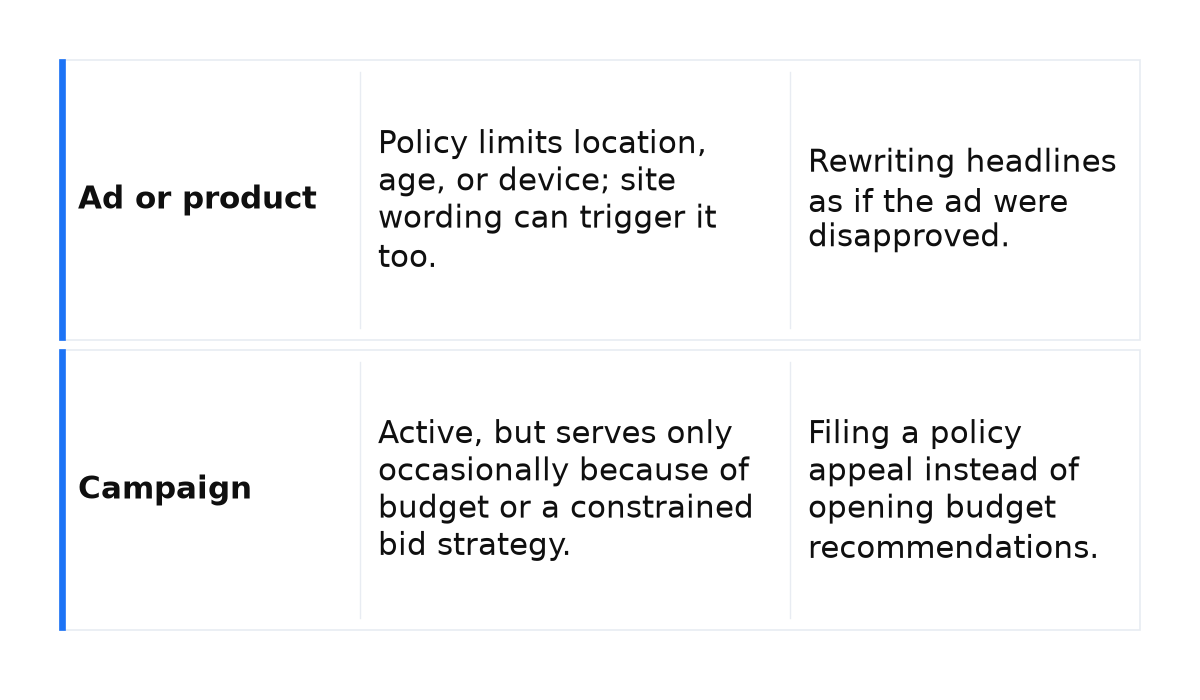
| Ad or product | Policy limits location, age, or device; site wording can trigger it too. | Rewriting headlines as if the ad were disapproved. |
| Campaign | Active, but serves only occasionally because of budget or a constrained bid strategy. | Filing a policy appeal instead of opening budget recommendations. |
What is at stake
Google does not suspend the account for this label and does not send a 7-day warning. Delivery shrinks; the owner either panics or never notices.
On an ad, some regions, ages, or devices never see it. On a campaign, ads serve only now and then because budget or a bid cap is starving delivery; editing headlines will not help. If nothing serves at all, see why a Google Ads ad is not showing.
What to do
- Find the object, not just the wording. Open Campaigns and the Status column, then open Ads. Both can say “Eligible (limited)”. Until you know which table holds the row, change nothing.
- If the label is on the ad, read the policy. Hover the status. Add the Policy details column if needed (Ads or Assets, columns icon, Attributes) and write down the name: Alcohol, Gambling, Healthcare, Trademarks, or another policy.
- Check the site, not only the ad copy. Remove regulated-industry terms from the landing page if you do not sell those products or services. Keep them if the service is genuinely regulated: then the status is doing its job.
- Appeal when you think the limit is wrong. Open Policy manager and click Appeal on that ad. If you already fixed the asset, the ad, or the landing page, click Save on the ad so Google Ads runs another review. Appeal status sits in the Status column and in Policy manager. Limit: 3 appeals per ad, then support only; wait at least 24 hours between attempts on the same ads or they count as duplicates. A whole-account appeal takes longer. From 21 July 2026, in-account appeals are unavailable for decisions older than 6 months. Rejected or marked duplicate: do not resubmit the same form; change the copy or the final URL slightly and save.
- If the label is on the campaign, open budget and bidding, not policy. Google points you to budget recommendations. Raise the daily budget or lift a bid cap that is starving delivery. See also campaign limited by budget.
What not to do
- Do not rewrite a compliant ad just to chase a cleaner status. Certified gambling ads and moderately restricted sexual content stay “Eligible (limited)”.
- Do not open a new account in a friend’s name. This label does not suspend accounts.
- Do not fire off appeals every hour. Duplicates burn the 3-attempt limit.
- Do not raise campaign budget to “fix” a policy limit on an ad, and do not edit headlines to lift a campaign budget cap.
When this does not apply
This walkthrough is not about Disapproved, a suspended account, or bid strategy rows such as Learning or Limited. On an ad, “Eligible (limited)” is policy. On a campaign, the same words mean budget or bidding.
If the status still does not move after these steps, we can review the account together: whether the row sits on the ad or the campaign, and whether the limit comes from policy or from budget.
My e-book “19 Google Ads Secrets”: how to get the most out of Google Ads without draining your budget, drawn from real campaigns and tests.
See the book →Questions and answers
Is this the same as Disapproved?
No. Disapproved stops serving until you fix the asset, copy, or landing page. “Eligible (limited)” still serves, but trims location, age, or device.
Why do the campaign and the ad use the same words?
Google reused close wording for two objects. Look at the table, not the word “limited”: Ads or Campaigns. That choice decides whether you open a policy or a budget.
Do I always need to appeal?
No. Appeal when the restriction looks like a mistake. If you are a certified gambling advertiser or you sell a regulated healthcare service, the row is working as designed. Google does not publish appeal review time in days: watch Status or Policy manager.