
Kaizen Forum took place on November 12, 2023, in Almaty, Kazakhstan, as an in-person business conference. The speaker was Igor Ivitskiy, an entrepreneur and Google Ads specialist with a background in mathematical modelling.
The talk connected Google’s business model with a practical shift in advertising: moving beyond conventional keyword research for Google Ads toward intent signals, conversion economics and clean feedback for the algorithm.
Advertising after the keyword-first era
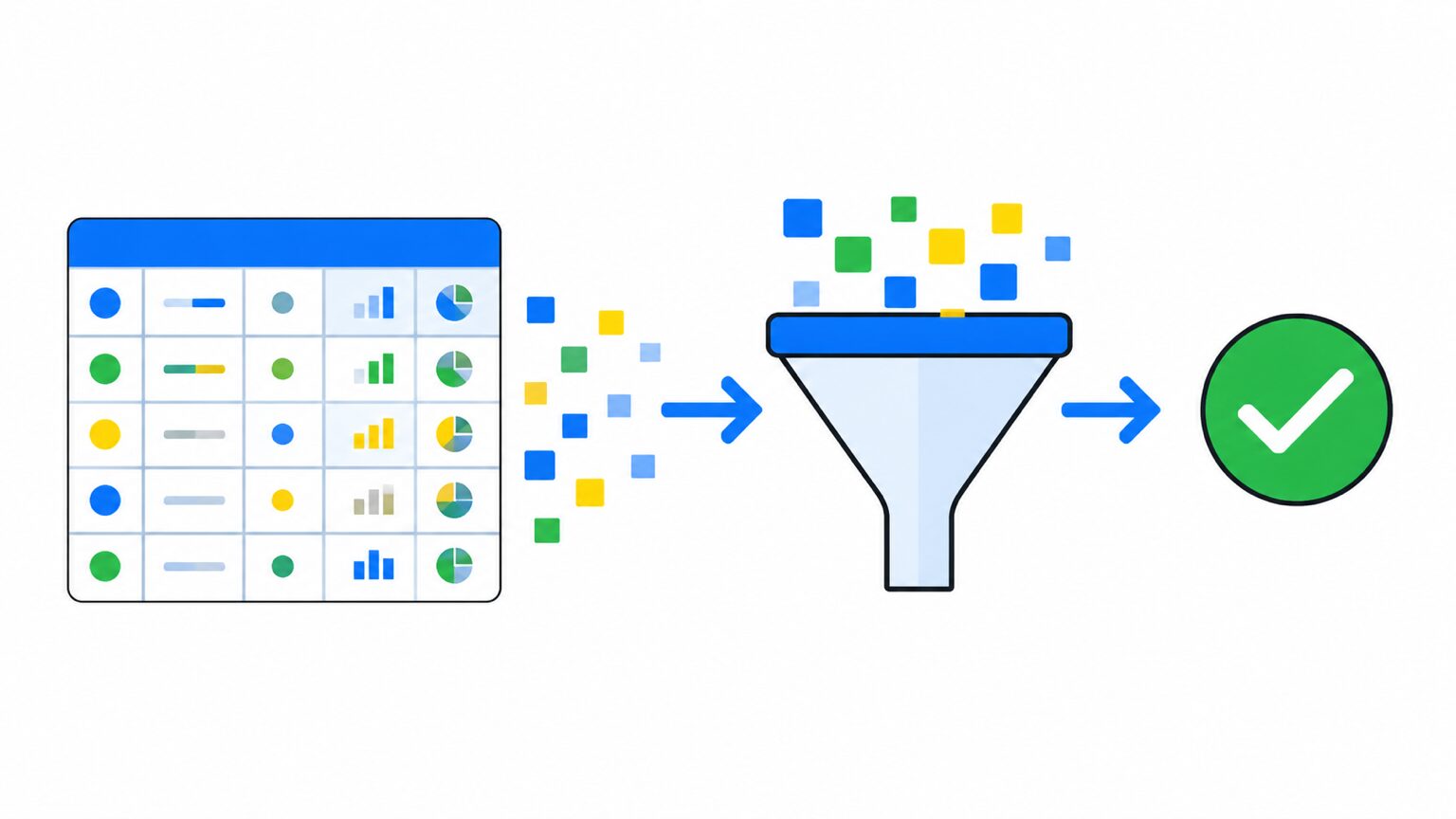
The old model treated the keyword list as the main source of control. That made sense when matching was relatively literal and the advertiser’s advantage came from finding phrases competitors had missed. Igor’s argument was that an AI-led auction changes the job. The useful question is no longer only which phrase to buy, but which evidence helps the system distinguish a likely buyer from a cheap but irrelevant click.
This is why the talk focused on the long tail and broad-match keywords. Google explains that broad match can use additional contextual signals to reach related searches, not merely repeat the words in the keyword list, in its official guide to broad match. Reach, however, is not the result by itself. It becomes valuable when the campaign can separate genuine intent from waste.
That separation depends on two kinds of evidence: who appears likely to be in-market, and what happens after the click. Google’s overview of ad targeting confirms that audience segments may reflect identity, interests, active research and prior interaction. Igor placed those signals alongside commercial outcomes and a disciplined view of negative keywords. The reason is simple: the algorithm learns from the success event the advertiser defines, even when that event is not a real sale.
Advertising funds the ecosystem, so data and prediction shape how the platform creates value.
Search context and recent behavior can say more than a broad demographic portrait.
Automation amplifies the conversion signal it receives, including a misleading one.
My standard is a buyer, not a visit
I do not treat cheap traffic or a growing conversion counter as proof of success. The data becomes useful only when the event being optimized reflects a real customer and the economics of the whole project.
This way of thinking is also central to the school’s training: use advertising data to make business decisions, while keeping the detailed setup inside the learning environment.
My e-book “19 Google Ads Secrets”: how to get the most out of Google Ads without draining your budget, drawn from real campaigns and tests.
See the book →Key insights
- The economics had changed. In Igor’s three-year account sample, average cost per click rose from about 3 to 27 Ukrainian hryvnias, far faster than the exchange-rate movement he cited.
- Rare searches form a large market. The talk attributed 70% of search traffic to queries entered only once or twice a month, making exhaustive prediction unrealistic.
- Intent is richer than a persona. Two people can type the same query while meaning different things; audience and context signals help distinguish them.
- More reach can improve the economics. One US campaign produced three times as many applications after spend rose by 20%, while the cost per application fell.
- Bad conversions train bad automation. A separate campaign generated 22,000 registrations and zero sales, so the apparently efficient signal was commercially worthless.
Key moments from the talk
Why the old playbook stopped being enough
Igor opened with an economic clue rather than an account setting. In the annual-report figures shown on stage, advertising represented 86% of Google’s revenue and all of the profit in his presentation. He used that framing to explain why free services, searches, maps, video and analytics matter to an advertiser: together they produce signals for prediction. An ad platform funded by relevance has a strong incentive to learn which message, moment and person can create value. Igor summarized the exchange in one line: “If we are given something for free, the product is most likely us.” For a business owner, the consequence is to understand the platform’s incentives before choosing how to work with it.
The pressure to change was visible in Igor’s own account history. Across 220 million Ukrainian hryvnias in ad spend, the average click had moved from roughly 3 hryvnias in 2020 to 27 three years later. He contrasted that ninefold rise with a currency movement of only about 10% to 15%. The figures illustrated why doing more of the same becomes expensive. The traditional workflow still resembled the early Google Ads era, when the decisive skill was finding another profitable phrase. “You cannot use methods from 2002 to work with the world’s most powerful artificial intelligence in 2023.” The point was not to abandon keywords, but to stop treating them as the whole system.
From obvious queries to hidden intent
The example “windscreen wipers Kyiv” captured the problem. The phrase appears commercial, yet it could refer to a cleaning job rather than car parts. The words do not settle the person’s intent, while the most predictable phrases attract every advertiser and become expensive. Igor said that 70% of search traffic lies in the long tail: queries entered only once or twice in a month. Separately they look insignificant; together they form a market too varied to enumerate beforehand. His Michelangelo metaphor supplied the strategic answer: start with a larger block of demand, then remove what does not belong. The detailed mechanics remain in the talk. The publishable principle is that discovery and exclusion must work together, because narrow prediction sacrifices reach while unfiltered reach sacrifices economics.
The same shift applies to audiences. A profile such as a 25-to-34-year-old man with two children is too coarse to explain what someone wants today. Search context, recent research, life events and commercial response can reveal intent the portrait misses. Igor illustrated this with a US project spending about one million dollars a month. It generated about 7,000 applications at an average cost of 138 dollars. After the campaign used more available signals, spend rose by 20% and applications tripled, while their cost fell. The configuration belongs in the recording. Strategically, a modest increase in input produced a much larger increase in useful volume because the campaign had a richer basis for deciding whom to reach.
When the algorithm learns the wrong lesson
The final case reversed the optimism. A mature funnel expected 1,000 registrations a day at 16 dollars each. New traffic appeared to deliver them at roughly half that cost, so scaling looked rational. In total, 22,000 registrations arrived. Sales then reported that not one had become a purchase: phone numbers were unreachable, names and emails were invented, and the apparent customers were dead ends. This was contaminated feedback as well as wasted spend. If a fabricated registration is called a success, the system seeks more behavior resembling it. As Igor put it, “The problem is not the bots themselves, but that artificial intelligence learns from them to bring us bots instead of living people.” Cheap acquisition had taught the machine the opposite of the business goal.
The talk ended with a stricter definition of data-driven advertising. Data is not automatically trustworthy, automation is not automatically intelligent and a conversion is not automatically valuable. The advertiser must connect platform feedback to commercial reality: does wider reach produce qualified demand, does the event survive contact with sales, and is the account learning from customers rather than noise? This is the boundary between using Google’s AI and surrendering judgment to it. Igor’s thesis was optimistic but conditional. The new era can uncover demand a keyword list cannot anticipate, provided that the guiding signal represents the outcome the business actually needs.
The full recording of the talk is included in the bonus pack for students.
Key takeaways
Google’s AI can discover intent beyond the obvious keyword list, but it magnifies the signal it is given.
Reach, audience data and automation matter only when conversions remain connected to real customers and business profit.