
Strategic Profits took place in Florida, US, in 2023; this session was presented as a recorded expert conversation. The speaker was Igor Ivitskiy.
The talk, “Audiences That Will Blow Your Sales”, examined how behavioral audience signals can help Google Ads find demand in video, display and Performance Max campaigns. It connected the discipline of Google Ads keyword research with a wider question: how do you express customer intent in a form that an automated system can use?
Give the model a clear signal, then keep the boundaries
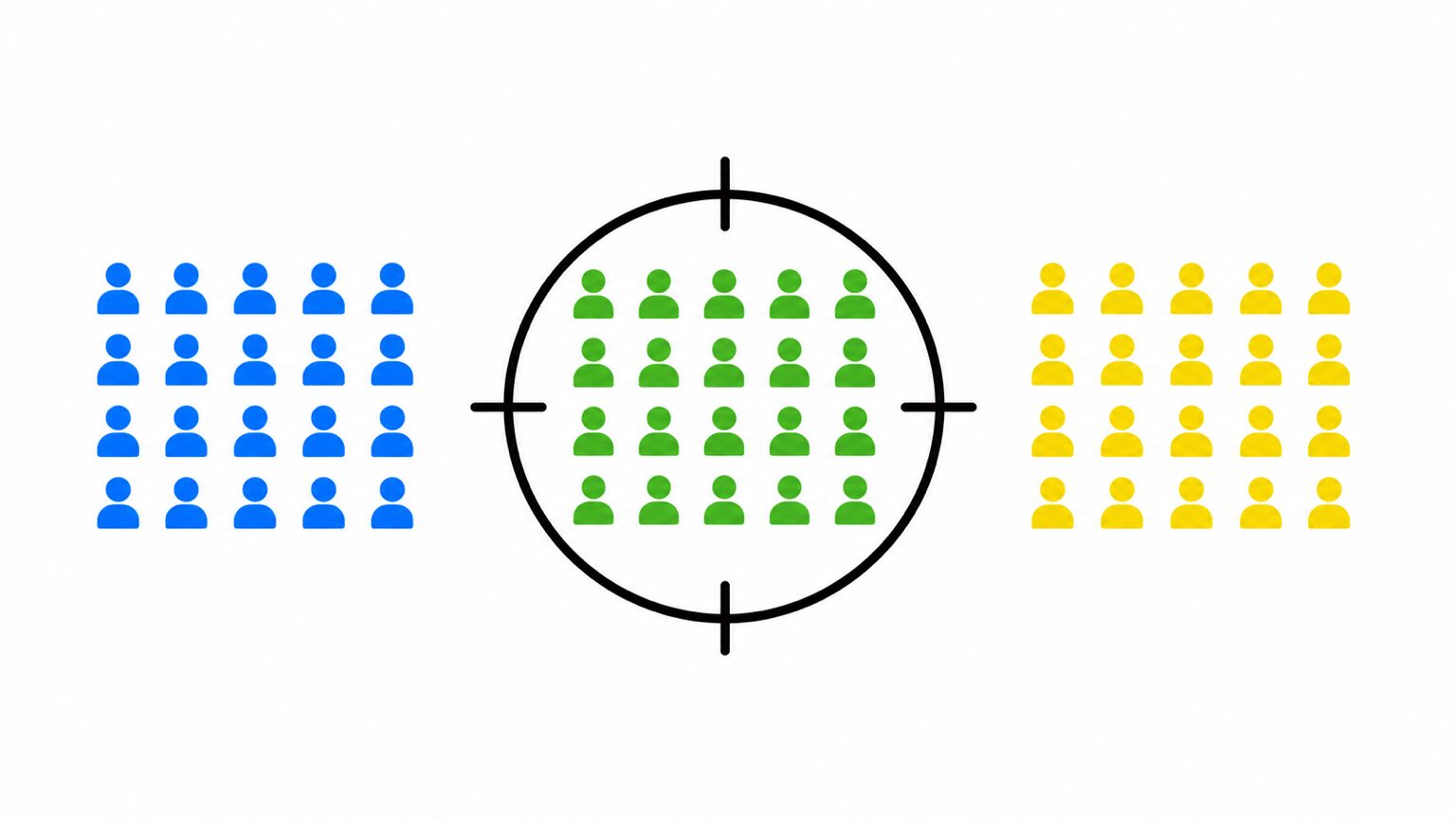
Igor used an analogy between human associations and machine learning. A person recalls a cluster of memories when a song or smell acts as a trigger. Google also groups observed behavior into contextual patterns. The analogy is not a technical description of Google’s internal architecture; it explains why a focused signal can be more useful than a bag of loosely related terms.
The strategic move is to work with behavioral context that the platform can already recognize. Google’s own documentation says that custom segments can use relevant keywords, URLs and apps to help reach people with related interests or purchase intentions. Igor’s point was that the advertiser should make the intended association coherent instead of treating the input field as storage for every idea from a search campaign.
That is a different kind of control from trying to prescribe every decision. It resembles the shift behind broad match: the advertiser defines the commercial frame, supplies useful evidence and judges the result, while the system explores within that frame. For Performance Max, Google likewise describes audience signals as suggestions that guide AI rather than hard targeting. Ads can still serve outside the supplied segment when the system predicts that doing so will support the campaign goal, according to the official Performance Max FAQ.
Express one recognizable customer context instead of an inventory of unrelated ideas.
Keep budget, bids, geography, devices, language, demographics and creative under deliberate control.
Use frequent, genuine conversions so the system learns from outcomes that matter.
Judge lead quality and downstream value, not conversion volume alone.
What I keep under human control
I do not try to outguess the model at every auction. I give it a coherent customer signal, then keep the commercial boundaries in my hands: spend, bidding, geography, devices, creative and the definition of a valuable conversion. The same evidence-first discipline matters when building negative-keyword controls.
This principle is useful beyond one campaign type because it separates strategic judgment from platform mechanics. Our training returns to that distinction and uses full cases to show where the boundary should sit.
My e-book “19 Google Ads Secrets”: how to get the most out of Google Ads without draining your budget, drawn from real campaigns and tests.
See the book →Key insights
- Audience quality changed the economics. In the SaaS comparison, cost per conversion fell almost threefold while the landing-page conversion rate stayed at 0.14%.
- Interaction rate exposed the difference. It increased fivefold, suggesting that ads were reaching people more willing to engage before they reached the unchanged landing page.
- Automation still needs boundaries. Budget, bidding, creative, geography, language, devices and demographic constraints remained advertiser decisions.
- Fast and genuine feedback matters. Long conversion delays and fake registrations weaken the signal used for campaign learning.
- Lead value matters more than lead count. Igor recommended end-to-end analysis to see whether the acquired users later became paying customers.
Key moments from the talk
Why a crowded audience can blur intent
The talk began with a problem familiar to performance advertisers. A custom audience field looks like an invitation to collect every plausible term: product names, old search keywords, interests and whatever else comes to mind. Igor said that this was also his first instinct when he encountered the feature. The result appears comprehensive to a person, but it can express no single behavioral context clearly. His brain analogy made the issue concrete. A useful trigger retrieves a connected cluster of associations; an arbitrary pile of memories does not. The purpose of the input is therefore not to describe the entire market in prose. It is to point the system toward a recognizable pattern of intent.
This is why Igor distinguished between advertiser-invented labels and behavioral categories that the platform already appears to recognize. Some suggested names looked repetitive or nonsensical to a human reader, yet he warned against judging a machine category by literary standards: “Never pay attention to the names that Google gives to their audiences.” The name is not the strategic asset. The useful question is whether the category represents a coherent group whose observed behavior relates to the offer. The full talk demonstrates the exact construction process and the distinctions inside the interface. The publishable principle is simpler: do not overload an automated system with many competing associations and then expect it to infer which one carries commercial meaning.
The comparison that isolated the audience effect
The central evidence came from a software-as-a-service advertiser. Under the previous audience setup, the account had spent almost $1 million and generated roughly 7,500 registrations. With the revised audience approach, the comparison period produced 24,000 conversions on $1.2 million. Igor summarized the economic result as a cost per conversion almost three times lower. Spend was not identical, so the meaningful comparison is efficiency rather than raw totals. The account did not merely buy more registrations by increasing the budget. It generated far more of them for each dollar spent.
The talk also offered a useful control. Conversion rate remained 0.14%, and the page and funnel had not changed. As Igor put it, “The landing page is absolutely the same.” Interaction rate, however, rose fivefold. That pattern supports his explanation that the change occurred before the click: a more relevant group saw the ads and chose to interact, while the existing page converted that traffic at its familiar rate. It does not prove that every account will repeat the result, but it makes the causal story stronger than a before-and-after chart with several simultaneous changes. A separate gaming project supplied another boundary of possibility: daily conversions moved from roughly 50 to 100 before the change to about 750 afterward at the same price per conversion.
Automation needs constraints and trustworthy feedback
Igor’s argument was not that advertisers should let Google make every decision. He explicitly listed the controls that remain with the operator: budget and bidding, audience combinations, video, text and images, geography, languages, devices, gender, age and income. The model can search for patterns inside that frame, but the advertiser remains responsible for the frame and for the business objective. His concise formulation was: “Don’t try to teach the artificial intelligence how to find your client.” In context, that meant using the model for the pattern recognition it is built to perform, while withholding permission to redefine acceptable economics or customer value.
The quality and speed of feedback decide whether that division of labor is useful. Igor limited the approach to lead-generation funnels with a short path from click to registration and enough real conversion activity for learning. He also described a dating project in which about 40% of recorded conversions used fake emails. Feeding those events back as success taught the system to find more of the wrong outcome. Verification can therefore matter more than a clever audience hypothesis. The final check belongs downstream: end-to-end analytics should show what people buy after registering and whether the new audience contains customers willing to pay, not merely cheap form submissions. Reach, engagement and conversion volume are intermediate evidence; profitable customers are the business result.
The full recording of this talk is included in the bonus pack for students.
Key takeaways
A coherent behavioral signal outperformed an overloaded audience setup in the account shown.
Almost threefold lower cost per conversion came with an unchanged 0.14% landing-page conversion rate.
The model finds patterns; the advertiser still owns boundaries, data quality and commercial judgment.