
Strategic Profits hosted this recorded presentation and interview in Florida, USA, in 2023; the event passport contains no official conference website. The speaker was Igor Ivitskiy, a PhD mathematician and Google Ads practitioner.
“How to Dominate Google Search Ads” examined a tension at the centre of Google Ads keyword research: narrow keyword selection feels controlled, yet it concentrates spend on the same obvious searches every competitor can see. Wider reach can uncover demand, but only when search-term economics, not intuition, governs what stays.
The market is larger than the keyword list
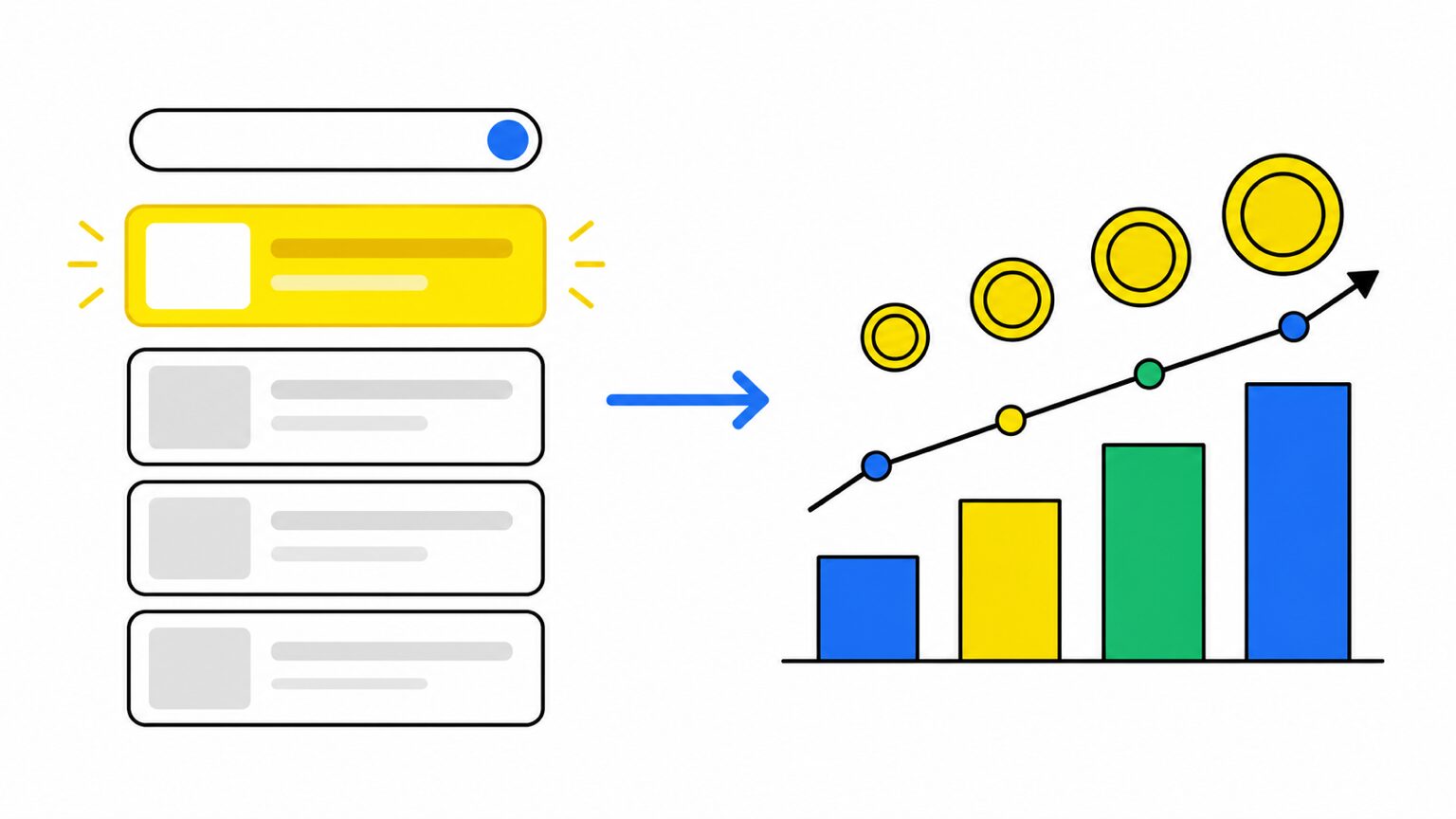
Search is attractive because the user states a need. Someone asking Google for a plumber is already closer to action than someone interrupted during a video. That intent also creates a crowded centre: advertisers repeatedly choose the most visible, frequent terms and compete for the same demand.
The alternative is to treat the long tail as a market-discovery problem. Broad match can reach related searches that a fixed list would miss, but reach alone is not an advantage. It becomes useful only when the account can distinguish valuable patterns from irrelevant traffic.
Igor’s principle is to make that distinction from observed economics. Search terms are evaluated at word level against cost and revenue, exposing signals that recur across a very large data set. This gives broad-match keywords a different role: they explore the market, while evidence-based exclusions protect profitability. Google describes negative keywords as a way to prevent ads from serving on unwanted searches; the talk focused on why account data should determine those exclusions.
Search begins with a need the user has expressed.
Demand extends beyond the familiar high-volume terms.
Cost and revenue reveal which language patterns deserve trust.
Wider coverage and evidence-based exclusions work as one system.
How I think about negative keywords
I do not label a word good or bad because it looks commercial, informational or cheap. I want the account’s own revenue and cost data to show what that word means for this business. The same word can deserve opposite decisions in two different projects.
This is the kind of strategic judgment our school develops in its training: reading the account as a business system, not copying a universal list of settings. The learning material goes deeper into the method without turning one case into a promise.
My e-book “19 Google Ads Secrets”: how to get the most out of Google Ads without draining your budget, drawn from real campaigns and tests.
See the book →Key insights
- Explicit intent is search advertising’s structural advantage. The user names a current need instead of merely fitting an audience profile.
- Obvious keywords are expensive precisely because they are obvious. A conventional list sends many advertisers toward the same small, visible pool of demand.
- The long tail needs both reach and restraint. Wider matching discovers unusual searches; evidence-based exclusions keep irrelevant traffic from consuming the budget.
- Profitability can contradict intuition. In the case shown, a word the team expected to exclude produced positive profitability, while seemingly harmless words did not.
- At scale, the unit of analysis changes. With nearly two million search terms in the data set shown, recurring word patterns mattered more than anecdotal inspection of individual queries.
Key moments from the talk
Why search remained Igor’s favourite channel
The talk opened with a distinction between interruption and intention. Display and video advertising can reach relevant people, but often catches them while they are doing something else. Search begins after a person has articulated a problem. A query such as needing a plumber now carries timing as well as topic, which is why Igor values the channel’s combination of reach and commercial intent. He put it plainly: “In Google search, we have explicit user intent.” Familiar text ads also fit the result page rather than interrupting an unrelated activity, so the format meets users in a context where offers are expected.
That advantage can produce false confidence. Building a list of familiar keywords, clustering them and narrowing their reach looks like full control, but every competitor can identify the same terms. The most visible searches therefore become the most contested. Igor’s criticism was strategic, not merely technical: “You’re hustling with competitors for crumbs.” The advertiser may manage each chosen keyword closely while leaving a much larger field of less frequent searches untouched. Control over a list is not the same as coverage of a market. The talk asked whether an account could preserve the value of search intent without confining itself to the language advertisers already know.
What changed in the cloud-mining campaign
The case came from a worldwide campaign for a cloud-mining service. Direct category terms had volume and immediate intent, but also many competitors. Expanding into less frequent yet still recognisable phrases reduced competition, though those searches often carried weaker buying intent and generated less total revenue. The breakthrough came from a different view of the long tail: people could be relevant even when their wording did not name the product category. Instead of trying to predict every rare formulation, the account used wider reach to enter those overlooked pockets of demand. The campaign ultimately ran in 16 languages and produced more than $1 million in search-ad revenue in four days.
The result did not mean broad reach was automatically safe. Igor described the opposite default: without a strong filter, irrelevant impressions can drain budget, weaken response and make the economics worse. Audience overlays and automated bidding can help, but they also change coverage or delegate the decision without explaining which language patterns create profit. His answer was to inspect the relationship between words, spend and revenue across the account. One data set shown in the presentation contained nearly two million search terms, about $7 million in advertising cost and $69 million in revenue. At that scale, relying on a person’s visual scan of individual queries is no longer a credible control system.
Why economics must outrank intuition
The most memorable example concerned the word free. A conventional review could flag it immediately as a sign of users who will not pay. In this project, the data showed positive profitability: some people who searched with that word still bought after seeing a suitable offer. Other words that looked harmless produced the opposite pattern. The lesson was not that free is universally good, or that any particular word should go onto a universal exclusion list. It was that intent has to be inferred within the economics of a specific offer. A label imported from another account can be more dangerous than the messy traffic it is supposed to clean up.
This is also the method’s hardest boundary. Costs are easy to export, but a useful analysis needs the revenue or profit attached to the exact search activity that generated it. “The biggest problem is to combine your search terms with your profit. Exact search term, exact profit.” Without that connection, the account can optimise clicks, conversions or surface efficiency while missing business value. The presentation included the spreadsheet logic and the host pressed Igor on the mathematics, but the durable point sits above the formulas: broad exploration only becomes disciplined when commercial outcomes feed back into the decision. Smaller accounts may inspect traffic manually; larger ones need enough clean data for patterns to outweigh anecdotes.
The full recording of this talk is included in the bonus pack for students.
Key takeaways
Search intent creates the opportunity; the long tail creates room to expand.
Account-level profitability, not assumptions about individual words, decides which traffic deserves investment.
The four-day, 16-language result showed the scale available when reach and economic control reinforce each other.