
Phrase match helps a business reach different ways of expressing the same intent without opening its ads to every possible search. Here is how it works, which bidding options suit it, and what you need to monitor after launch.
To use this match type in a Google Ads search campaign, place the keyword in quotation marks. For example, "bank loan". Google treats the phrase as a coherent meaning, so a search such as "cash loan from a bank" will not necessarily trigger the ad.
How phrase match works
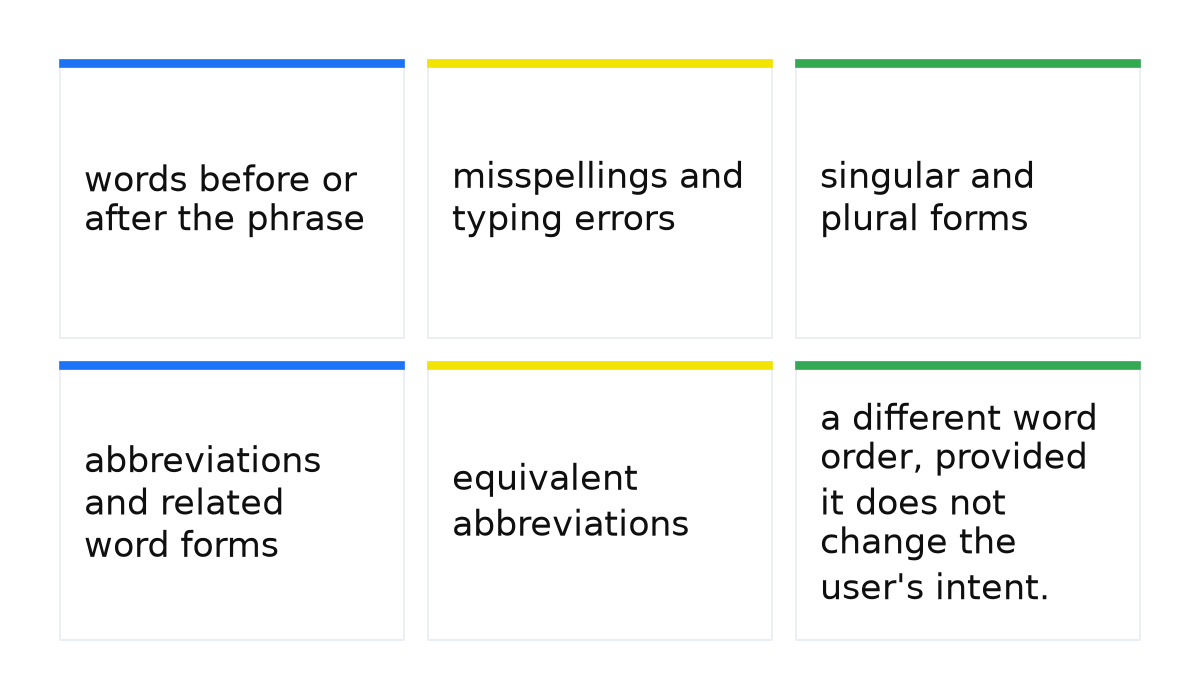
An ad can appear when the search includes variations of the keyword phrase:
- words before or after the phrase, such as "get a bank loan," "affordable bank loan," or "bank loan with a low interest rate";
- misspellings and typing errors;
- singular and plural forms, such as "loans from banks" or "loan from banks";
- abbreviations and related word forms, such as "bank lending";
- equivalent abbreviations, such as "TV" and "television";
- a different word order, provided it does not change the user’s intent.
If word order changes the meaning, Google takes that difference into account. "Moving Kyiv to Odesa" and "moving Odesa to Kyiv" describe different directions. A company serving both directions should add both phrase match keywords.
You can build the initial list with the free Google Ads Keyword Planner.
How to use phrase match effectively
Phrase match is versatile because it usually provides medium reach and medium relevance. By comparison, exact match has lower reach and higher relevance, while broad match offers maximum reach with the lowest relevance.
How I use phrase match for discovery
I treat phrase match as a controlled way to discover new wording, not as a tool for preserving an exact sequence of words. I regularly group real searches by intent, move consistently valuable themes into separate management, and block branches that the business does not serve. This expands reach deliberately and makes the negative keyword list reflect the boundaries of the offer.
Google’s documentation explains how the search terms report connects searches, keywords, and match types.
If you want help building this control system, the practical next step is an audit of your keywords, search terms, and negative keywords.
My e-book “19 Google Ads Secrets”: how to get the most out of Google Ads without draining your budget, drawn from real campaigns and tests.
See the book →Why phrase match reach matters
You cannot know every phrase people will use to find your products or services. One main keyword can capture other relevant variations, including searches that occur very rarely. Keyword Planner cannot reveal some of these phrases because its statistics cover searches entered at least 10 times per month.
How to get relevant traffic from phrase match
Relevance is the alignment between the meaning and intent of a search and what your business sells. Google finds wording that is close in meaning, but not every selected search will suit your offer. At the start of a campaign, review search terms every day and add irrelevant variants as negative keywords. Later, you can reduce the review cadence to weekly and then monthly.
Bidding strategies for phrase match
Phrase match can work with manual bidding as well as automated strategies that use a target cost per conversion.
- Automated strategies adjust bids according to conversion probability, click cost, and other factors. They require accurate conversion tracking. A beginner does not need to adjust and optimize bids for every keyword separately.
- Manual bidding gives you more control over how impressions are acquired, but it requires an understanding of bid optimization. It can technically run without configured conversions, although those data are still necessary for effective optimization.
How match types changed in 2021
In 2021, phrase match replaced broad match modifier. The modifier had been used to prevent Google from showing an ad when a user’s search replaced words with related meanings or contained only one word from the phrase.
Phrase match now incorporates the behavior of broad match modifier and matches searches by meaning. The keyword "women’s shoes" does not automatically exclude "women’s sneakers". If sneakers are outside your offer, use negative keywords and review actual search terms. Google accounts for word forms, close synonyms, abbreviations, and misspellings, as explained in its keyword matching guide. Advertisers therefore do not need to build long lists of different ways to say the same thing.
Negative keywords provide another layer of control. You can add them in the same area as keywords when creating a campaign, or create a new negative keyword list in the exclusions section of the shared library.
When this does not apply
Phrase match is not sufficient on its own when word order changes the direction or meaning of a service. In those markets, add every required variation separately. It also cannot provide useful control without regular search term reviews, appropriate negative keywords, and reliable conversion tracking for automated bidding.
In most other cases, phrase match helps you control which searches trigger an ad, reach more people than exact match, and bring relevant traffic to the page. Start with the main phrases and protect quality by reviewing real searches.