
Customer reviews help answer the doubts that hold future buyers back. Yet a happy customer may never think to write one. They paid, received what they expected, and moved on. If you want to hear about their experience, you often need to make the first move.
3 reasons businesses avoid collecting reviews
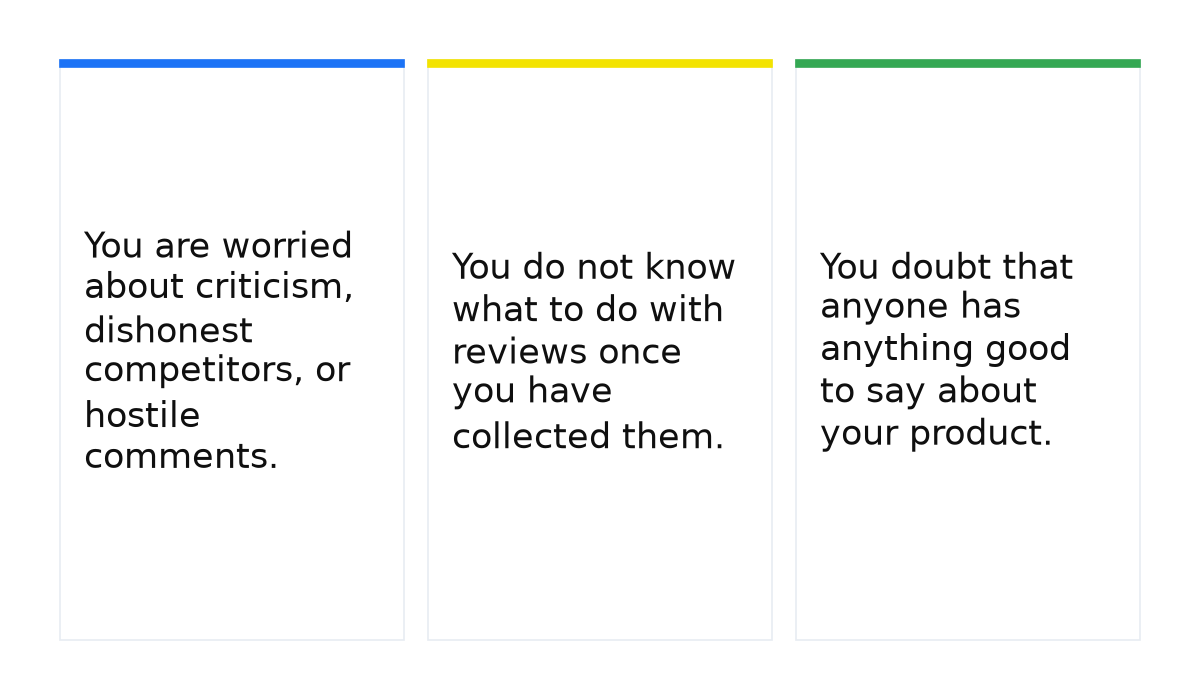
- You are worried about criticism, dishonest competitors, or hostile comments.
- You do not know what to do with reviews once you have collected them.
- You doubt that anyone has anything good to say about your product.
The first two concerns call for a clear process: when to ask, how to make answering easy, and where to use the feedback. The third calls for a better product. No review collection technique can replace an experience customers are happy to describe.
How to collect customer reviews
Reviews are useful for more than a testimonials page. They can show you how your team treats customers and what happens after a purchase. Customers may tell you about problems you would otherwise need a mystery shopper to uncover. Their feedback gives you something concrete to improve.
When I ask a customer for a review
I ask after the customer has reached a point where they can assess the experience, rather than at the moment they pay. I use the same invitation criteria for all eligible customers instead of selecting only those who seem happy. My message asks a neutral question and provides a direct route to the form. That way, the feedback reflects what happened, and dissatisfaction helps identify a process that needs fixing.
For an example of an invitation after an order has been fulfilled, see the overview of Google Customer Reviews.
Take the initiative
Handle the practical work for the customer: choose a suitable moment, send a short request, and explain where to respond. Help them express their own view without steering them toward praise. Describing a problem should be just as easy as describing a good experience.
Choose a suitable platform
Google Business Profile, Trustpilot, and Yelp are places where customers may review your business, but their rules differ. Where invitations are permitted, provide a direct link instead of making people search for your business. Yelp says businesses should not ask customers for reviews, so do not use the same invitation process there.
If you need feedback for your own service improvements, a simple Google form can help. Include questions with answer options and space for customers to explain their experience in their own words. This gives them a starting point without asking them to compose a testimonial from scratch.
Draft a testimonial from the customer’s own words
If a customer would rather talk on the phone, turn their answers into a draft testimonial. Keep their meaning and do not add praise or results they did not mention. Send the finished text back for approval and ask for permission to publish it. Separately confirm whether you may include their name and company.
An organised customer email list can also make follow-up communication easier. The aim is to keep in touch and make replying convenient, not to manufacture a review on the customer’s behalf.
Reviews on social media
Some customers find it more natural to leave a comment on social media than on a company website. Readers can also visit the reviewer’s profile to get more context about the person sharing their experience. Where the platform allows it, ask for a short, honest review on your business page and explain that it can help other customers decide whether to buy.
Offering a bonus for a review
A discount on the next purchase may seem like a straightforward way to encourage both a review and a return visit. But you cannot apply that approach without checking the platform’s rules. Google prohibits incentives for reviews, and Trustpilot also prohibits incentivised reviews. Keep any repeat-purchase offer separate from your review request: receiving a discount should not depend on posting a review.
With permission, share customer feedback on your website and in social posts, and publish video testimonials on YouTube. Preserve what the customer actually said. Reviews can help people who are still deciding whether to trust your business, so use them where those questions arise. Remember to reply to feedback, including criticism.
Choosing the right target audience also matters: the experience you share should be relevant to the people considering your offer. When presenting your customers’ stories, separate claims that can be checked from those that cannot.
When this does not apply: collecting reviews will not fix a product that fails to meet expectations. Nor should you ask customers to judge a result they have not experienced yet, or replace their opinion with praise you have prepared for them.
Start with a repeatable process: choose the right moment, write a neutral request, and make responding easy. Once that is in place, customer feedback can support both better service and the way you attract new customers.
Separate tools work once they are tied into one system. My e-book “19 Google Ads Secrets” shows how to get the most out of Google Ads without draining your budget, drawn from real campaigns and tests.
See the book →