
Bansko Nomad Fest ran in Bansko, Bulgaria, from June 22 to 29, 2025; this was an English-language conference talk. The speaker was Igor Ivitskiy.
Nomad-Ready Google & YouTube Ads: Building a Personal Brand That Sells examined how an expert can combine branded and problem-led search, video credibility and recurring banner visibility without funding mass-market reach every day. The talk connected that model with disciplined keyword research, while keeping the strategic question in view: who should see the message again after the first contact?
Why familiarity changes the economics
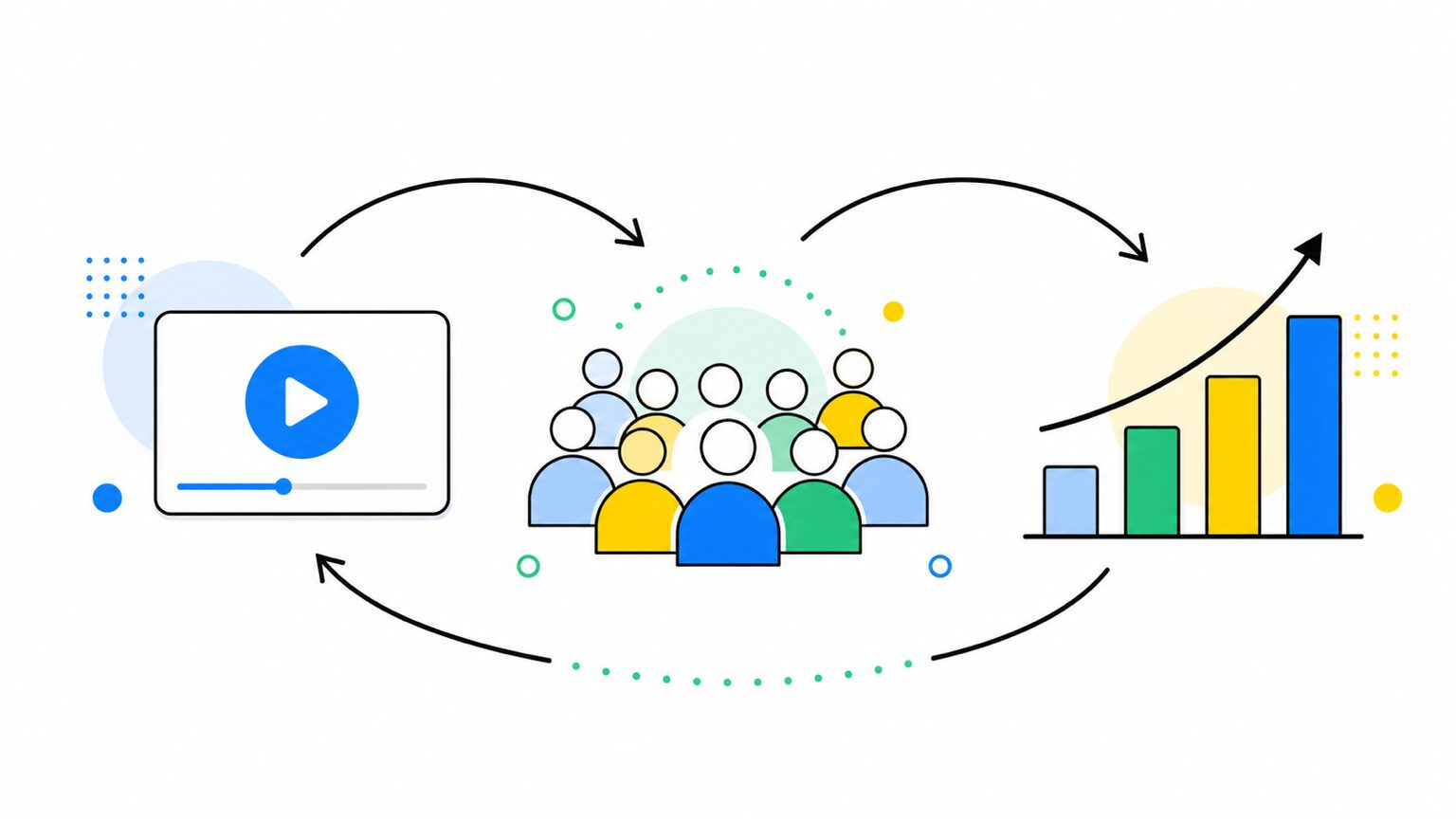
A client may remember one post, ad or short video, yet the decision usually rests on a longer chain. Before making contact, that person may search the expert’s name, read an article, watch a video and encounter the same face on other sites. The talk treated these touches as one credibility system rather than unrelated campaigns.
The economic argument follows from selection. Buying a broad commercial query for everyone can expose an advertiser to a very large and expensive market. Combining search intent with prior interaction restricts the audience to people who already have context. That is also why broad match was presented as a source of discovery, not as permission to pursue every possible user.
Google’s own documentation describes data segments built from previous interactions across a site, videos and customer information. It also documents using those segments with video advertising. Igor’s strategic layer sits above those capabilities: one interaction can become the context for a later message on a different surface.
Meet explicit interest around a name, brand or narrowly defined problem.
Let viewers spend enough time with the expert to form an informed impression.
Stay recognizable across other online contexts without buying universal reach.
My principle for efficient visibility
I do not need every person on the internet to see every message. I want the next relevant message to reach people who already have a reason to recognize me. Careful use of negative keywords supports that focus, but the larger decision is about audience context, not a single setting.
This way of thinking is useful in training because it connects channel tactics to the customer journey that gives them meaning. The detailed order of actions remains part of the full session rather than this article.
A conference slot only fits the essentials. My e-book “19 Google Ads Secrets” shows how to get the most out of Google Ads without draining your budget, drawn from real campaigns and tests.
See the book →Key insights
- The remembered ad is only the visible touch. Search, articles, videos and banners can all contribute before a client makes contact.
- Warm context is the main cost filter. The model narrows reach to people who have already interacted with the expert or brand.
- Search, video and display have different jobs. Search captures intent, video deepens credibility and display reinforces recognition.
- One audience can connect the channels. A useful interaction on one surface can shape who receives a later message elsewhere.
- Narrow commercial intent can beat generic scale. The talk contrasted a costly broad query with a much smaller, more specific opportunity.
- The framework is strategic, not universal. It depends on having meaningful prior interactions and content worth seeing again.
Key moments from the talk
The interaction people remember is not the whole journey
Igor opened with a familiar answer from clients: they saw an ad, post or reel and decided to get in touch. He challenged that compressed memory with an iceberg metaphor. Long before the final visible touch, a person may have encountered videos, searched a surname, noticed a face in banners, read articles or subscribed to a channel. “But it’s only the top part of the iceberg.” The line reframed personal-brand advertising as cumulative recognition. No single impression has to carry the complete burden of trust. The strategic task is to make the separate encounters coherent enough that the expert feels familiar when a commercial need finally becomes active.
He grouped that hidden journey into three roles. Search presence answers the verification impulse that appears before someone works with a person or company. Video supplies time and voice, which can turn a name into a credible expert. Display keeps the face or brand recognizable while the prospect visits other sites. “So three main components and today we will combine all of them.” The combination matters more than channel count. Search without depth may confirm only that a name exists. Video without discoverability may remain unseen. Repetition without prior relevance can become expensive noise. Together, the three roles support recognition, evaluation and recall at different moments of the same decision.
The real budget decision is who remains eligible
The constraint was global reach. Covering Search, YouTube and Display for everyone could require thousands of dollars per day, far beyond the budget of many independent experts. Igor illustrated the problem with a broad US query for a Google Ads agency. At roughly 10,000 monthly searches and a cited click range of $1 to $37, he estimated monthly coverage at $10,000 to nearly $300,000. Extending that ambition worldwide could push the figure much higher. This was not offered as a universal benchmark or campaign result. It was a contrast that exposed the weakness of treating all possible demand as equally valuable to a personal brand.
The alternative was to make prior interaction the common filter. In Igor’s example, instead of addressing all 10,000 people searching a commercial phrase, an advertiser might address only 100 who had previously visited the site, watched a video or appeared in a customer list. “So the solution for this problem is to focus only on users who are already on your radar.” Narrow problem searches and branded searches can also bring people with stronger context at a smaller cost. He contrasted the broad query with a specific search example that he put at about $100 per month. The deeper claim was not that narrow always wins, but that intent and familiarity should determine where scarce attention is purchased.
One audience, three different contexts
The framework then returned to the three surfaces. Search can attract people already looking for a name, brand, narrow problem or alternative provider. Video can create a new interaction even when the viewer does not visit the website, while later video placements can continue the relationship with someone already known. Display extends recognition across news, weather, entertainment and other sites where Google advertising appears. The same logic applied to placements inside Google products. At the strategic level, each surface contributes either an initial signal or a later reminder. The talk contained the operating sequence, but the publishable idea is the loop between useful discovery and selective reappearance.
This loop changes what being everywhere means. It does not require buying every impression across the internet. It means appearing consistently inside the smaller digital world of people who already crossed the brand’s path. That makes the model especially relevant to an expert whose name, face, articles and videos are part of the product’s credibility. It also sets honest boundaries. A new expert with no meaningful interactions has little audience to reconnect with. Weak content does not become persuasive merely through repetition. A business seeking immediate cold-market scale is solving a different problem. The framework is therefore a way to compound earned familiarity, not a substitute for a clear offer or useful body of work.
The full recording of this talk is included in the bonus package for students.
Third-party traces
Key takeaways
Personal-brand visibility becomes more affordable when prior interaction, not maximum reach, defines the audience.
Search, video and display work as complementary layers of intent, credibility and recognition.
The model compounds familiarity; it does not replace a useful offer, credible content or initial discovery.