
The LOB conference took place in Kyiv, Ukraine, in 2024, with this session delivered live online. The speaker was Igor Ivitskiy.
The talk examined how changes in Google’s advertising system affect entrepreneurs, then connected that diagnosis to three routes to market: Search for expressed demand, Maps for local discovery and YouTube for products or services that need to be shown and explained. The common thread was disciplined learning from intent, not blind faith in platform automation, starting with sound keyword research for Google Ads.
Control before scale
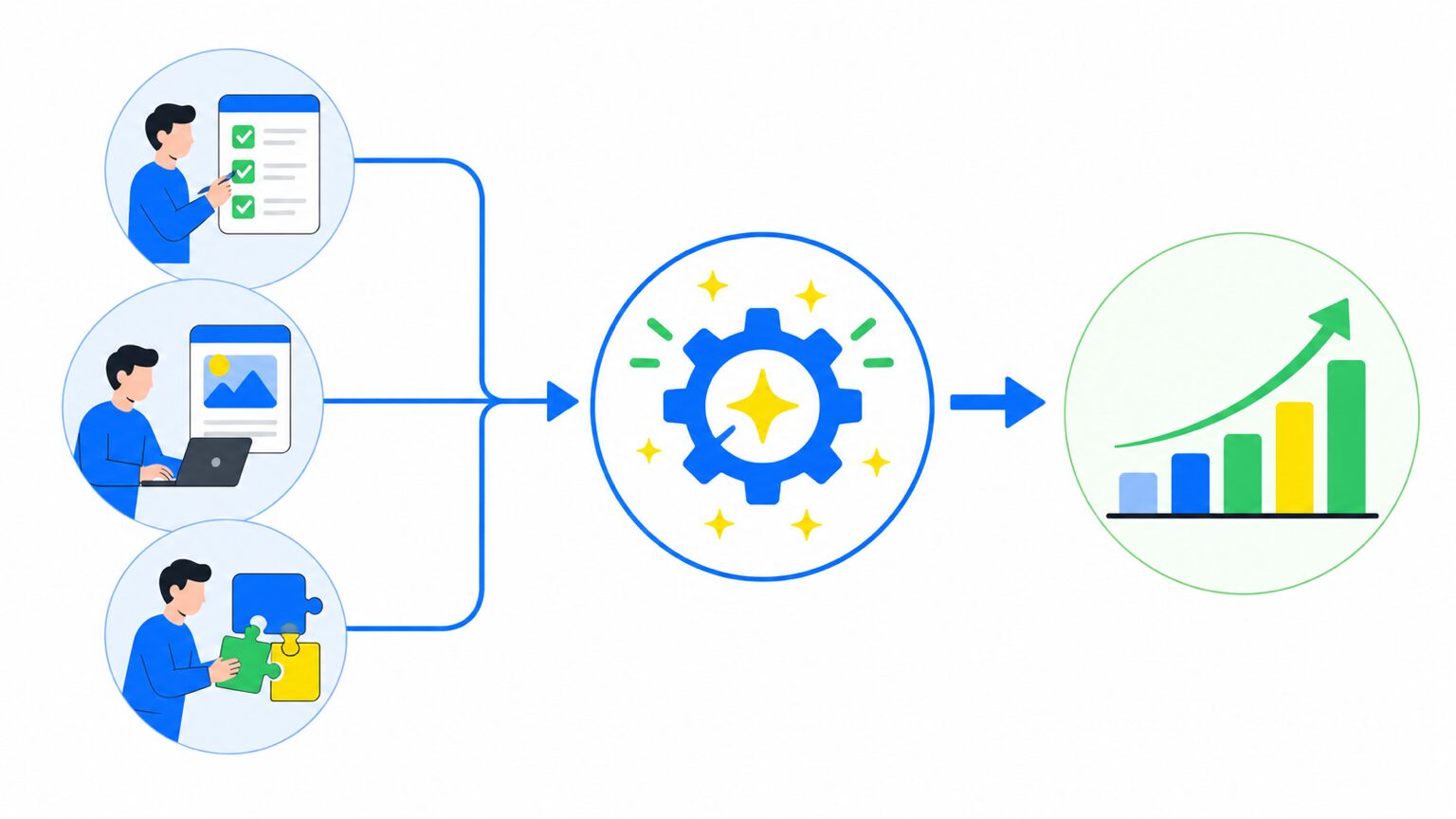
Igor’s central argument was that an advertising platform and an advertiser do not measure success in the same way. The platform benefits when more clicks can be sold. The business benefits only when those clicks become economically useful customers. He used the antitrust case to describe three pressures behind this gap: ads spreading beyond core search, auctions expanding toward informational queries and campaign controls becoming less transparent.
The practical response is not to reject automation. It is to give automation a stronger base. Clear commercial intent reveals what genuine demand looks like; observed search behaviour shows which language belongs and which does not. Only then can broad match and Google’s AI help explore a wider market without turning reach into the only objective.
This is also why exclusions matter. Google documents the role of negative keywords, but the talk framed them as accumulated business knowledge, not a cosmetic campaign cleanup. A useful exclusion reflects evidence about intent and economics. The same logic sits behind Igor’s fuller explanation of why broad-match keywords need a learned boundary around them.
Capture demand people can already express, learn its language and expand only from evidence.
Turn a distinctive local offer into a reason to choose one nearby business over many similar ones.
Show and explain value when a product, service or investment case cannot be understood from a text ad alone.
My principle for using AI in advertising
I do not ask automation to discover the business model for me. I first learn what real buying intent looks like, what traffic creates value and what should be excluded. Then AI can widen the field without replacing judgment.
This way of thinking also shapes our training: students work from intent and evidence before they scale tools or formats. The full method is taught as a system, while the article keeps to the strategic reasoning behind it and the role of negative keywords in controlling waste.
My e-book “19 Google Ads Secrets”: how to get the most out of Google Ads without draining your budget, drawn from real campaigns and tests.
See the book →Key insights
- Platform incentives and business incentives differ. More available clicks help the seller of advertising, while the advertiser needs profitable customer actions.
- AI needs a behavioural baseline. Automation becomes more useful after the account has learned what clear intent and valuable traffic look like.
- Each channel solves a different demand problem. Search captures expressed need, Maps supports local choice and YouTube carries visual explanation.
- Differentiation comes before local promotion. The Manhattan coffee shop in the talk reached a 5.0 rating and 380 reviews in about six months around a memorable strawberry latte.
- Reach is not the same as relevance. A larger audience can include informational or accidental clicks that have little commercial value.
- Adaptation is the durable advantage. The goal is not maximum manual control or maximum automation, but a system that reacts to evidence.
Key moments from the talk
Why the old promise of Google Ads changed
Igor began with his own route into advertising. His academic field was mathematical modelling, and after leaving university he applied the same habit of looking for mechanisms and constraints to Google Ads. That perspective mattered because his subject was larger than campaign technique. Google had once felt like a direct profit engine: a person searched, an advertiser answered and both sides understood the exchange. The Department of Justice material shown in the talk suggested a different trajectory. Over ten years, the dollar cost of advertising had doubled, even without a matching explanation from competition alone. For an entrepreneur testing a new business with limited savings, inefficient early traffic is not merely a bad metric. It can destroy confidence in the venture before the offer has had a fair test.
The talk grouped the pressure into three mechanisms identified through the court case. First, ads presented as search traffic could also appear across partner sites where the user’s immediate intent was weaker. Second, the auction could extend from clearly commercial searches to informational queries, creating more clicks to sell without creating more buyers. Third, reduced transparency made it harder for advertisers to see and control where money went. Igor turned that final direction into a joke about a future interface with one button: “Take my money and show advertising to at least someone.” The humour carried a serious point. When the system optimises its own revenue, the advertiser needs an independent definition of useful demand.
One principle across three channels
For Search, that definition begins with the thought behind the query. A broad term may have impressive volume while saying almost nothing about whether the person needs the business now. A narrow phrase can have little traffic yet describe a customer with a present problem, a location and a preferred language. Igor repeatedly returned to one diagnostic question: “What is on this person’s mind?” This is a strategic test, not a keyword recipe. The account first has to observe how unmistakable buying intent behaves. Search-term evidence can then reveal useful language, waste and the point at which a wider market becomes an informed experiment rather than a guess.
Maps changes the context from a query to a nearby choice. If a screen shows many similar cafés, restaurants or repair shops, promotion alone gives the user little reason to select one. Igor illustrated the answer with Simple Coffee in Lower Manhattan. Two Ukrainian entrepreneurs built recognition around a strawberry latte, a product that customers photographed and shared. The slide showed a 5.0 average rating and 380 reviews roughly six months after opening in an intensely competitive area. The lesson was not to copy the drink. It was to make the business describably different before paying to place it in front of local demand.
Where AI helps and where judgment stays
YouTube completed the trio because some value propositions need demonstration. A property investment, a visually distinctive product or a service that requires explanation can communicate more through video than through a short search ad. Across the niches and countries in his experience, Igor said YouTube clicks could cost about twice as much as Facebook or Instagram clicks, yet the resulting prospects could be two to three times stronger and move faster toward a purchase. He also challenged the production myth: later videos in his projects were simple recordings rather than complex shoots. What mattered was whether the message helped the right viewer recognise relevance.
The final strategic layer was sequencing. Google AI can extend reach, find patterns and use signals unavailable to a human scanning queries one by one. It cannot supply a missing commercial baseline. “I will give you a concept. A concept is not a detailed instruction,” Igor told the audience, drawing a useful boundary around the session itself. His concept was to learn before expanding: establish what valuable behaviour looks like, then let the system search more widely while the business keeps evaluating profit and intent. He closed with a personal version of the same principle. Four years after attending LOB and imagining himself on its stage, he returned as a speaker whose work had moved from Ukraine to international conferences. Adaptation became both the advertising thesis and the career story behind it.
The full recording of the talk is included in the bonus pack for students.
Key takeaways
Search, Maps and YouTube address different forms of demand, but all three depend on clear intent and a distinct offer.
Use AI to extend a model that has learned from evidence, not to conceal that the model is still unknown.