
The Genius Marketing conference took place in Kyiv, Ukraine, in 2022 as an interactive online session. The talk was delivered by Igor Ivitskiy.
The session explained why advertising becomes expensive when a business appears only at the moment of purchase, and how a wider view of Google Ads keyword research, audience signals, video, display, Gmail and remarketing can support the whole customer journey.
Advertising across the full decision journey
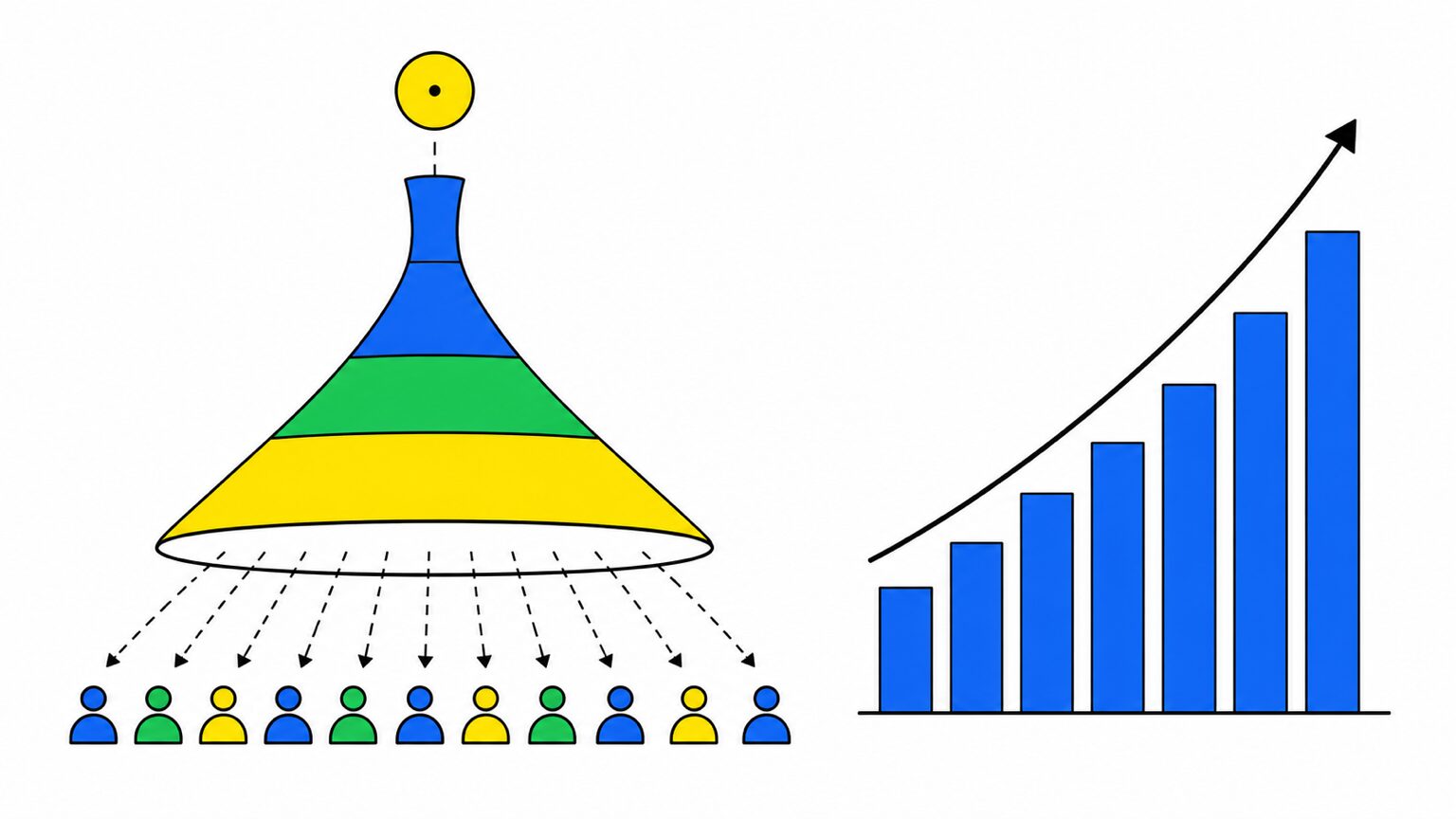
The central idea was to stop treating the final search as the whole market. A person moves from not recognizing a problem to learning about possible solutions, comparing providers, buying and sometimes buying again. The useful ad at each point is different. A demonstration can reveal an unnoticed problem; educational content can expand the person’s picture of the category; evidence and reputation can reduce uncertainty later.
This works partly because auction pressure is uneven. Igor’s window example compared expensive “buy windows” searches with much cheaper questions about window types and materials. Google’s official Keyword Planner documentation confirms that the tool provides search and cost estimates. Those estimates are inputs for judgment, not proof that an informational click will become a sale.
The second reason is continuity. Google Ads can connect Search with YouTube, display inventory and audiences based on interests, active research or previous interaction. Google describes these options in its guide to audience segments. The strategic point is broader than a broad-match campaign: the business builds familiarity before the highly competitive purchase query appears, then keeps the relationship useful instead of repeating the same sales message.
The person does not yet recognize the problem or the category. Communication opens a useful new possibility.
The person understands that a solution exists. Education explains what has changed and why it matters.
The person compares approaches and providers. Distinctive value, proof and reputation become important.
The first order is not necessarily the end. Service, maintenance or a relevant recurring offer can extend the relationship.
My operating principle
I want advertising to help a person make the next sensible decision, not force the final decision too early. The business should understand the customer’s stage first, then choose the message and channel that fit it.
This way of thinking is also useful in training because it gives campaign decisions a commercial context. The detailed demonstrations and account mechanics remain part of the learning material rather than this summary.
My e-book “19 Google Ads Secrets”: how to get the most out of Google Ads without draining your budget, drawn from real campaigns and tests.
See the book →Key insights
- The purchase query is only one stage. Entering earlier can create familiarity before the expensive comparison begins.
- Competition changes the price of attention. In the window example, an informational click was roughly 20 times cheaper than a ready-to-buy click.
- One message cannot carry the whole journey. Problem discovery, education, comparison, purchase and retention require different reasons to pay attention.
- The owner sees commercial signals that a brief can miss. Search language can reveal unmet demand, new services or a mismatch between the offer and the market.
- Reputation is part of media efficiency. Familiarity can be lost at the final check if search results do not support the promise.
- A first purchase can open a second model. Maintenance and subscription examples showed how a business might reduce seasonality when recurring value genuinely exists.
Key moments from the talk
Why the obvious search is expensive
Igor opened by widening the audience’s definition of Google advertising. Search was only one part of the system he described, alongside YouTube, display placements, maps, apps and Gmail. That mattered because many businesses in his example behaved as if the only valuable moment were the final search. A window installer would bid for a phrase such as “buy windows in Kyiv” precisely when every nearby competitor wanted the same attention. The auction then reflected the crowd. Igor used the everyday contrast between summer and winter tomato prices to explain the mechanism: when more buyers chase the same limited opportunity, the price rises. His stage example put the commercial click at about $2.
He then contrasted that crowded query with informational searches about window types, glazing and profiles. The example price was about $0.10 per click, even though the displayed search volumes were not negligible. The point was not that cheap traffic is automatically good traffic. It was that a business pays a premium for waiting until intent is explicit. Earlier questions may cost less because fewer advertisers have designed a useful answer for them. This reframes the role of negative keywords and other traffic controls: efficiency is not only about removing waste from a late-stage campaign, but also about deciding where in the decision process the company can create value before competitors arrive.
From an unknown problem to a preferred provider
A central part of the session was the journey from unawareness to interest. Igor described seeing a car-detailing video that transformed a worn vehicle into a glossy one. He had not been looking for detailing, yet the demonstration made the category relevant. A door advertisement worked in a similar way: a weak door was opened in seconds, while a more resistant model survived a much longer test. The advertiser did not wait for a search about door security. It revealed a risk and supplied evidence while the category was still new to the viewer. “People remember emotions,” Igor said near the beginning, explaining why demonstrations can stay with an audience longer than a list of claims.
Once the problem is recognized, the communication job changes. The person needs to understand available technologies, then why one provider can deliver them safely and reliably. Igor repeatedly separated category education from provider differentiation. A company that sells a common material gains little by repeating that the material is good when every competitor says the same thing. It has to explain the consequence of choosing the installer, design or service badly. From there, video viewers, site visitors and other engaged audiences can encounter the next relevant idea. This is not permission to follow people with one repetitive banner. The talk’s remarketing principle was to reveal useful product details over time, so each contact advances understanding.
What only the business owner can notice
Igor’s challenge to delegation concerned market learning. He told the story of a tyre-service owner whose contractor had excluded searches for wheel alignment because that service was absent from the original brief. When the owner later reviewed the search language himself, he saw local demand and recognized a possible expansion. The contractor had followed the assignment; the owner connected the query to equipment, capacity and additional customer flow. Search data therefore acted like a visit to the shop floor. It showed what people were asking for in their own words, while the commercial decision still required the owner’s knowledge of margins, operations and investment.
The same long view applied after the sale. Igor used window maintenance, beauty services and other subscriptions to ask whether a one-time category could carry recurring value. He did not claim that every offer should become a subscription. The useful question was whether customers face a repeated problem that the business can solve consistently. That can soften seasonality and make demand more predictable, but only when the service remains real. Before purchase, reputation has a similar constraint: a weak search footprint can undo earlier media work. “It is not important to be number one. The history of your interaction with people matters.” The final click receives credit, but the customer’s memory was built much earlier.
The full recording of this talk is included in the bonus pack for students.
Key takeaways
Scale can come from entering the decision journey before the crowded purchase search, then matching each contact to the customer’s current question.
The stage example showed a roughly 20x click-cost gap, but the durable lesson was strategic: price, message, reputation and repeat value have to work as one system.