

On 25 September 2026, PPC.London brought about 250 paid-search specialists from agencies and companies to the De Vere Grand Connaught Rooms in London, and the day opened with a single-track talk from 9:00 to 9:30. The speaker was Igor Ivitskiy, a PhD in mathematical modeling who uses that training to read a Google Ads account.
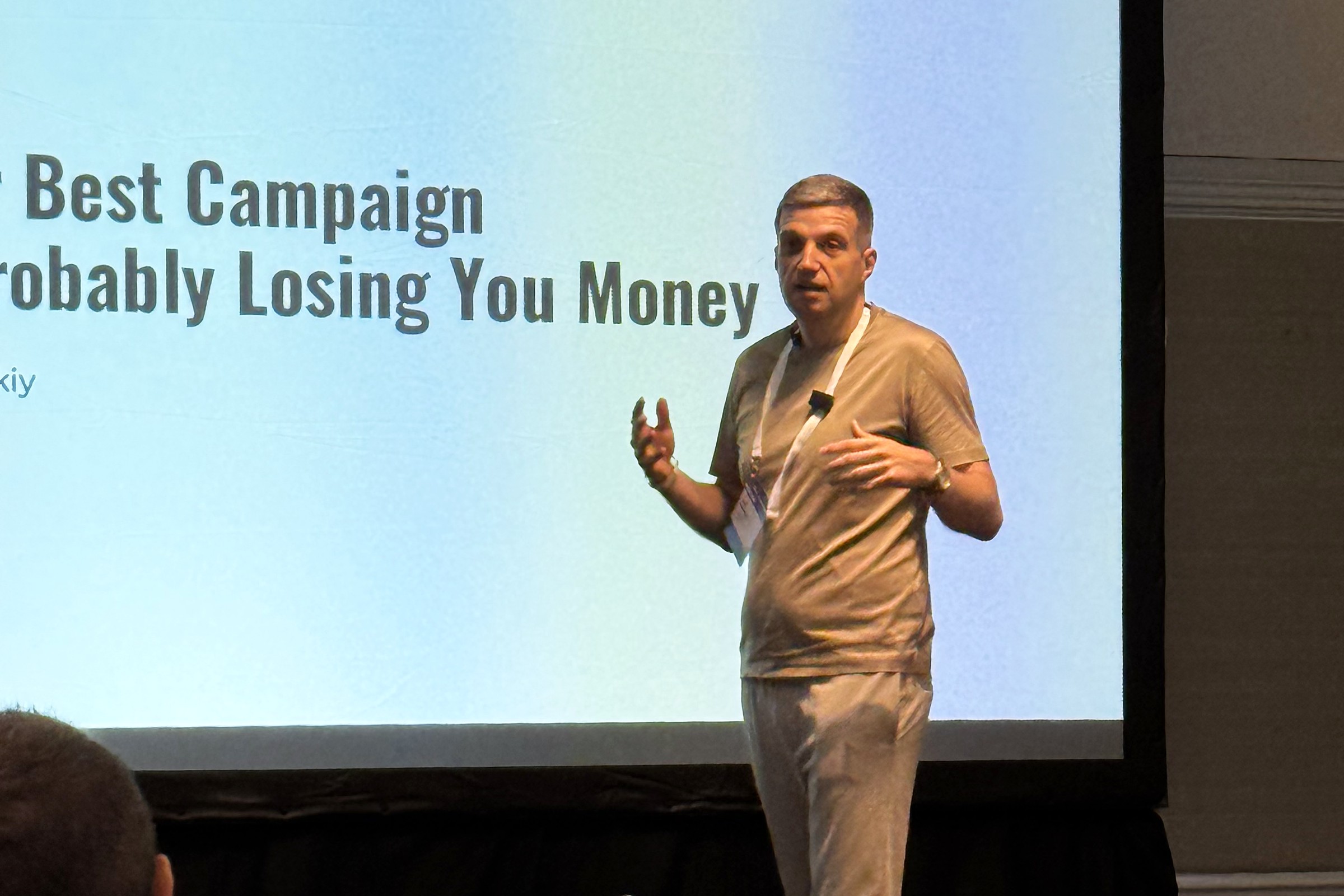
Your best campaign isn't your best. It's your least tested campaign.
| Conference | PPC.London 2026 |
| Date | 25 September 2026 |
| City and venue | London, De Vere Grand Connaught Rooms |
| Session | First talk of the day, 9:00-9:30, one track |
| Talk | “Your Best Campaign Is Probably Losing You Money” |
The talk was for people who already live inside an account and trust a clean return. Igor promised the room three things: a way to see whether a campaign earns a profit or simply adopts a sale that would have happened anyway, a map of where a healthy account loses money, and a way to separate signal from noise before anyone moves the budget. The published session described that habit directly. Read the account the way a scientist reads data: correlation against cause, the profit an average hides, signal against noise. That is the thinking behind Profit Forensics.
A correct figure can still spend the wrong money
Google Ads is honest about the arithmetic it was given. It divides a value you sent by the cash you spent. It does not know, unless you tell it, which part of that value is tax, delivery, a size that will come back, or an order that was already standing at the till. A return of £11 per pound can be the most expensive line in the company. A return of 2.2 can be the line that actually brought someone new.
The three questions work because they change the definition of a win. Will this happen again, or was it a thin sample, one whale of an order, a single bright week? Would the customer have bought with no ad, through the brand name, a return visit, or a discount code they went looking for? Is the figure money the company keeps, after returns, after the recipe that built the number, and after a view the model treated as a sale? An average hides the whale. A short window hides the quiet month. Credit and cause are different questions.
Experienced rooms are the ones this catches. The people at PPC.London already know how to read a column. The blindness is confidence in a metric that has never been asked a second question. Igor told the room he wanted a system of nine mistakes you remember once and use for the rest of a career. The nine sit under the three questions. On stage he walked through each check in order. The questions are the part worth keeping on a Monday.
A thin run of sales, one oversized order, one glowing week. Any of the three can crown a campaign that looks ordinary once the sample grows up.
Brand searches, ads to people already coming back, searches for a code at the till. The order is real. The cause may belong to the shop anyway.
Returned sizes, tax, delivery, and a view recorded as a sale. The column can be perfect while the cash is smaller.
Your best campaign isn’t your best. It’s your least tested campaign.
Igor Ivitskiy, PPC.London 2026
I try to break a winner before I pay for it
I do not fund a campaign because it leads the table. I try to knock the number over first. Take away the biggest order, the lucky week, the tax, the delivery, the view that never became a click. If the campaign is still ahead, it has earned the budget. If the lead changes, I was about to scale a story.
Five days later, at SMX Advanced Europe in Berlin, Igor went one level deeper into the statistics behind these checks. The habit behind them is what Igor teaches: read the account before the budget moves.
My e-book “19 Google Ads Secrets”: how to get the most out of Google Ads without draining your budget, drawn from real campaigns and tests.
See the book →Key insights
- A reported return of 10 can hide a loss of £700. In a worked example from the talk, £1,000 of ads recorded £10,000 of sales. Ninety of 100 orders would have happened anyway. Ten new orders left £300 of profit.
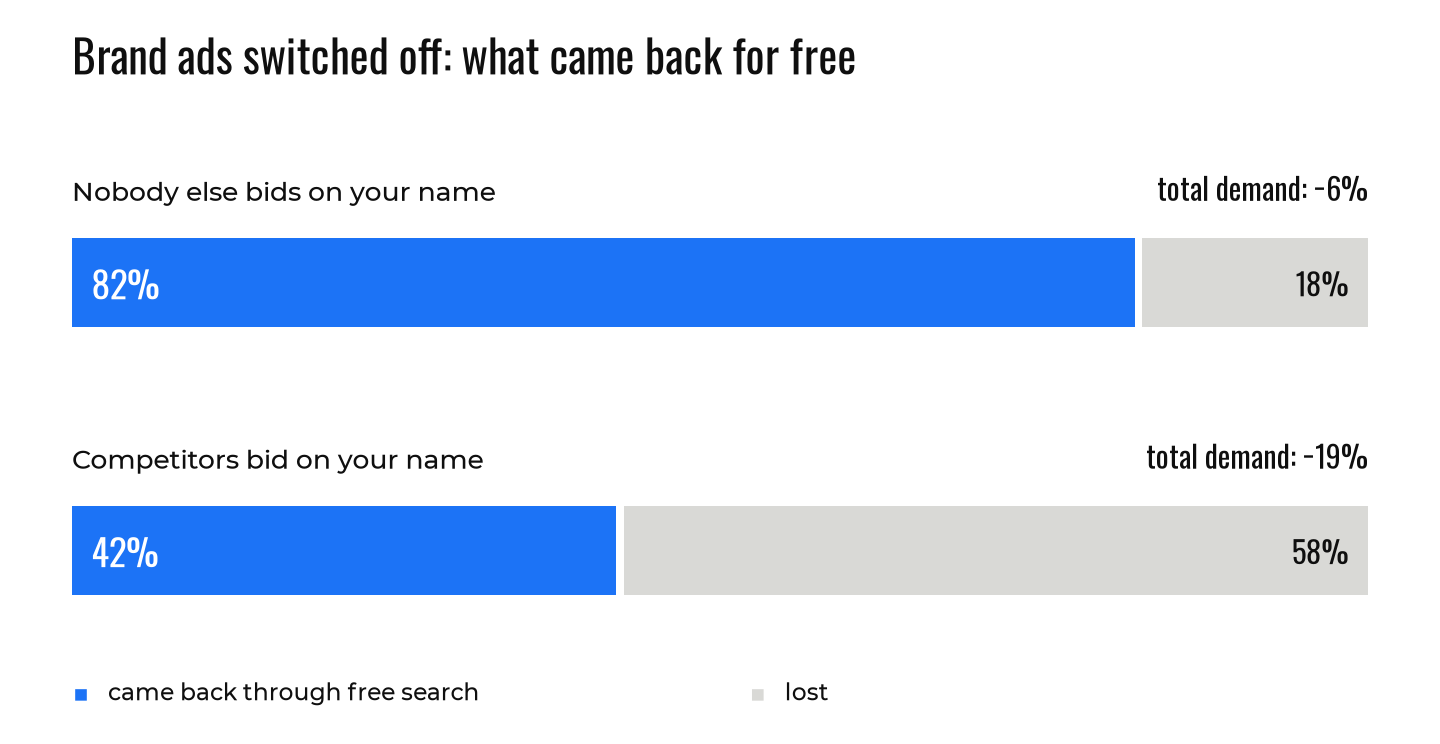
- Brand ads are cheap to pause when the gate is empty, and expensive when it is not. In one experiment, 82% of the clicks came back through free search and total demand fell by 6%. When competitors were bidding on the name, 42% came back and the total fell by 19%.
- A larger remarketing budget can move orders instead of creating them. Spend up 75%, orders on that line up 60% (from 300 to 480), all returning orders unchanged at 1,000. Email, direct and free search had given up the 180.
- Returns can reverse the ranking. Before returns, campaign A led at 8.0 against B at 6.0. After returns, A stood at 5.2 and B at 5.7. Orders of two or more sizes were 22% of A and 4% of B.
- One recipe for the value changes the winner. The same sale, counted as £113, £100 or the £90 the shop kept, produced returns of 5.0, 4.4 and 4.2. On the money the shop keeps, they became 4.0, 4.0 and 4.2.
- The best line is the least tested line. Around 25 sales, luck alone can move the return by 20% or more. A day that showed 9.6 over 7 days showed 5.6 over 14, and the spike was gone over 28.
Key moments from the talk
A Monday report and an empty bank
Igor opened on a last-30-days campaign table every paid-search specialist has seen. Brand search had spent £2,140 and recorded £23,540, £11 back per pound. Generic search and Performance Max sat at 2.2, shopping at 1.7, display at 0.5. Beside the table, payroll had failed for lack of funds. “Your bank account is empty.” Seasonality, a new competitor, a broken tracking template: each can be a real leak, and each can be the story a team tells again next month. He quoted Daniel Kahneman. “We can be blind to the obvious. But the hardest truth is that we are also blind to our blindness.”
Nine of his own mistakes went into three piles: lucky, stolen and miscounted. A small campaign jumps from a return of 8 to 23. A larger one moves from 9 to 12. With about 25 sales, luck alone can move the return by 20 percent or more. With about 100 sales, by 10 percent or more. Nineteen orders at £80 and one at £800 put campaign A at 5.8 against B at 5.0. Once the £800 order was swapped for a typical £80, A fell to 4.0 and B stayed at 5.0. A day at 9.6 on a 7-day window was 5.6 across 14 days. On 28 days the spike was gone, and the line sat between 4.0 and 4.5. “No peaks, no drops, no spikes, just a steady situation.” He trusts the long window. He gave the checks in order on stage.
Would this sale have happened anyway?
“Would the sale happen anyway or not?” He asked it first of brand search, and he likes those campaigns. “I love brand search campaigns.” A fee on every person who already typed the shop’s name is a toll booth on your own driveway. In one experiment he switched the ads off. “In one of my experiments, I’ve observed that 82% of clicks came back just through the free organic way. So total drop just minus 6%.” When competitors were bidding on the name, 42 percent of the clicks came back and the total fell by 19 percent. Pay for the name when someone else is at the gate. Measure what disappears in the pause. The same check applies to Performance Max, which can quietly buy your brand name too.
Returning buyers are the next sale an ad can collect without causing. About 1,000 orders a month came from people who had already bought. Remarketing, ads after a past visit, held 300. Email, direct visits and free search held 700. A 75 percent rise in that budget took the line from 300 to 480. The meeting hears a 60 percent gain and expects about 1,180 if the other channels hold. They fell by 180, to 520. The month ended at 1,000. The budget had moved orders onto a paid row. Remarketing works when all returning orders grow. He has written up cases where remarketing hurts once that total is ignored.
Promo-code searches look stronger still. A basket of £100, a code box at checkout, then a search for the shop and a discount code. In his figures those searches converted at 9.4 percent, other searches at 5.4. The ad finishes a purchase the till had started. In the worked example on stage: £1,000 spent, 100 orders, £10,000 recorded, a return of 10. Ninety orders would have happened anyway. Ten were new and left £30 each after goods and delivery, £300 in all, against £1,000 spent. The campaign was down £700. Where a partner would have taken a cut, the click can be worth the fee it saves. Where no fee exists, it saves nothing.
The number can be right, but the conclusion that we’ve done based on this number can be wrong.
Igor Ivitskiy, PPC.London 2026
When the figure is not cash
He cited a 2025 survey of 1,002 UK shoppers: 62 percent order several sizes and keep one, and about 30 percent of online clothes come back. Campaign A led at 8.0 against B at 6.0 before returns, then stood at 5.2 against 5.7. Orders in two or more sizes were 22 percent of A and 4 percent of B. A returned order can leave the report. Google Ads provides conversion adjustments for that. Sending the value you expect to keep is the faster habit, and he walked both routes step by step. A large UK store, open more than ten years, kept £90 on a sale reported three ways: £113 with tax and delivery, £100 before the discount, and £90. Returns of 5.0, 4.4 and 4.2 became 4.0, 4.0 and 4.2 on the money kept. In Performance Max and Demand Gen, part of a perfect result came from views rather than clicks. Data-driven attribution, Google’s default, had awarded it. “Only tests can prove that they did.” Each line of his map, he said, was “a mistake somebody already paid for.”
The full recording of this talk is part of the bonus pack for students.

Third-party traces
Key takeaways
The healthiest line in the report can be the one emptying the account.
Before you scale, ask whether the result will repeat, whether the sale needed the ad, and whether the number is cash.
One order, one week or one recipe is enough to change the winner.
Other talks
All of Igor's other conference talks are collected on one page: where else Igor Ivitskiy has spoken.