
Strategic Profits took place in Florida, United States, in 2024, and this recorded expert session focused on click fraud and fake leads. The speaker was Google Ads expert Igor Ivitskiy.
The talk, “Click Fraud and Fake Leads”, examined why an apparently successful campaign can produce cheap conversions while quietly destroying sales quality. It connected traffic sources, lead validation and bidding feedback into one strategic problem, building on the same attention to intent that begins with disciplined Google Ads keyword research.
The real loss is a corrupted learning signal
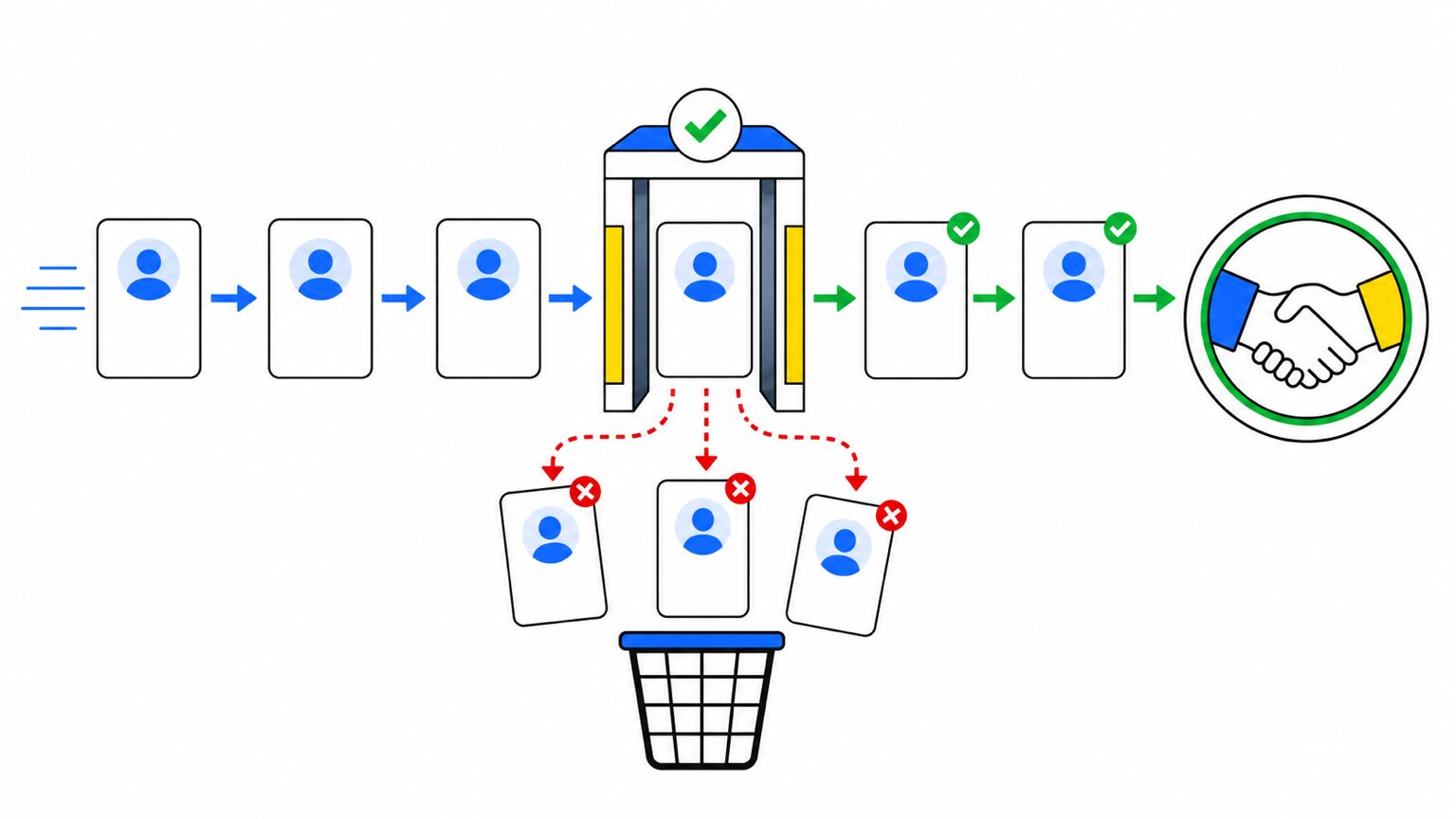
The campaign looked exceptional at first. Its target was 1,000 daily registrations at $16 each, yet reported lead cost quickly fell to $8. Because the normal sales cycle lasted seven days, nobody knew during the first week that the apparent improvement came from people with no buying intent and from automated activity.
The immediate loss was painful, but the feedback loop was more dangerous. Automated bidding saw cheap recorded conversions, treated them as success and searched for similar users and placements. The account was effectively rewarding the pattern it needed to escape. Google’s own explanation of invalid traffic provides useful platform context, but Igor’s argument went beyond click filtering: the advertiser must distinguish a submitted form from a real commercial outcome.
This changes the optimization question. A lower cost per lead is not automatically progress, just as wider reach through broad match is not automatically scale. The signal has to remain connected to the customer and to revenue. Only then can more traffic improve the business rather than magnify a measurement error.
The source of a click matters as much as its reported price.
A submitted form is evidence of activity, not yet evidence of demand.
The event used for optimization shapes what the system seeks next.
Revenue and qualified opportunities decide whether scaling is real.
What I protect first
I do not treat every recorded conversion as equally valuable. I want the system to learn from people who have demonstrated real intent, while search terms, placements and negative keywords help me understand where the budget is actually going.
This way of thinking is part of how we teach Google Ads: metrics become useful only when they remain tied to the customer journey and the economics of the business.
My e-book “19 Google Ads Secrets”: how to get the most out of Google Ads without draining your budget, drawn from real campaigns and tests.
See the book →Key insights
- Cheap leads can be an expensive failure. The case produced registrations at $8 instead of the planned $16, but none became a viable opportunity.
- Fraud changes future traffic. When false leads count as conversions, automated bidding learns to seek the same low-quality pattern.
- Validation speed is a strategic variable. A seven-day delay allowed ten days of spend before the sales-quality problem became visible.
- Scale can come from reallocation. In another account, moving spend away from false conversions increased revenue by 24% on the same budget.
- Control belongs at several levels. Search terms, placements, location quality and automated account changes can all affect who reaches the funnel.
Key moments from the talk
When perfect dashboard numbers hid a dead pipeline
The opening case was built to feel like a success. The client knew that an average buyer converted seven days after the first click, so lead quality was not reviewed before that window closed. The campaign had a clear target: 1,000 registrations a day at $16 each, supported by a daily budget of $16,000. From the second day, the platform appeared to outperform the plan. Registrations arrived at $8, creating the impression that the same budget could produce twice the growth. By day ten, the account had generated 22,000 registrations and spent $180,000. Igor described the emotion plainly: “I felt like I’m a superhero in this niche.” The team was already discussing more budget because every visible acquisition metric pointed upward.
On day eleven, the sales report reversed the story. There were no payments and not even plausible opportunities inside the batch. Some submissions came from bots; others came from real people who had no intention of buying. One source was a familiar kind of download page where advertising buttons were visually confused with the button a visitor actually wanted. The visitor thought a form would unlock software, while the advertiser interpreted the same form as demand. The company’s data scientists documented the click patterns and sent the evidence to Google. After several months, Google accepted that there had been a fake-lead problem but returned only $800. The case established a hard operating fact: a dashboard conversion can be technically real and commercially meaningless at the same time.
Why click-level defenses miss the larger problem
The obvious response is to block suspicious clicks, but the talk showed why that frame is too narrow. A CAPTCHA can stop basic automation, yet it cannot reliably stop organized activity or a real person following the wrong incentive. IP exclusions have the same weakness because sophisticated operators can change addresses through virtual machines or VPNs. More importantly, neither tool tells the bidding system which leads later became credible customers. Igor compressed the lesson into one warning: “The real problem is not in the money. The real problem is that you train your account algorithm for finding the fake leads.” Every false success makes the next round of automated acquisition more likely to resemble the last one.
That is why the proposed solution moved from the click to events in the customer journey. The talk covered several ways to obtain a stronger signal, from early human validation to post-registration behavior and confirmed commercial status. Google documents the broader capability to import offline outcomes into Google Ads; the strategic point here is not a particular integration. It is that optimization should learn from an event that is meaningfully closer to value. A longer form may reduce the visible conversion rate. A later signal may produce fewer reported conversions. Those changes can still improve the business if they remove accidental users and prevent false activity from becoming the model’s definition of an ideal prospect.
Scaling by improving the mix, not merely the budget
The second half widened the lens from individual forms to the traffic portfolio. In one account, real leads represented roughly 70% to 80% of volume before an aggressive budget increase. Once spending rose, the platform found more available clicks, but much of the extra volume was fake. More budget had amplified the weakest part of the mix. Another case produced the opposite result: the same total budget generated 24% more revenue after spend was reallocated from fraudulent conversions toward real ones. The contrast supports a disciplined definition of scale. Growth is not the act of buying more recorded activity. It is the act of increasing qualified demand and revenue without allowing weak signals to take over the learning system.
Igor then mapped the places where weak traffic can enter: irrelevant search terms, sites built mainly to earn from ads, low-value video channels, questionable apps and users outside the intended service area. He also warned that automated recommendations and account-level assets can alter targeting or messaging in ways that change the audience. These observations were not an argument against automation. They were an argument for accountable automation, where the advertiser knows what outcome the system is pursuing and checks whether the people behind the metrics resemble customers. The closing principle was early validation: “Don’t put off until tomorrow a lead that can be called today.” The full recording, including the operational walkthrough, is part of the bonus pack for students.
Key takeaways
The $180,000 loss exposed a measurement problem before it exposed a traffic problem.
A stronger business signal can protect both today’s budget and tomorrow’s automated decisions.
Real scale means more qualified demand and revenue, not more dashboard conversions.