
In 2025, Strategic Profits hosted this interview-style presentation in Florida, US. The speaker was Igor Ivitskiy, who shared a personal experiment outside his usual Google Ads topic.
The talk, “How AI Search Will Make or Break Your Brand”, examined what changes when prospects ask an AI system whom to trust instead of opening a list of search results. Igor contrasted conventional keyword research for Google Ads with the way an AI forms a connected picture of a person or company from public evidence.
AI visibility is a coherence problem
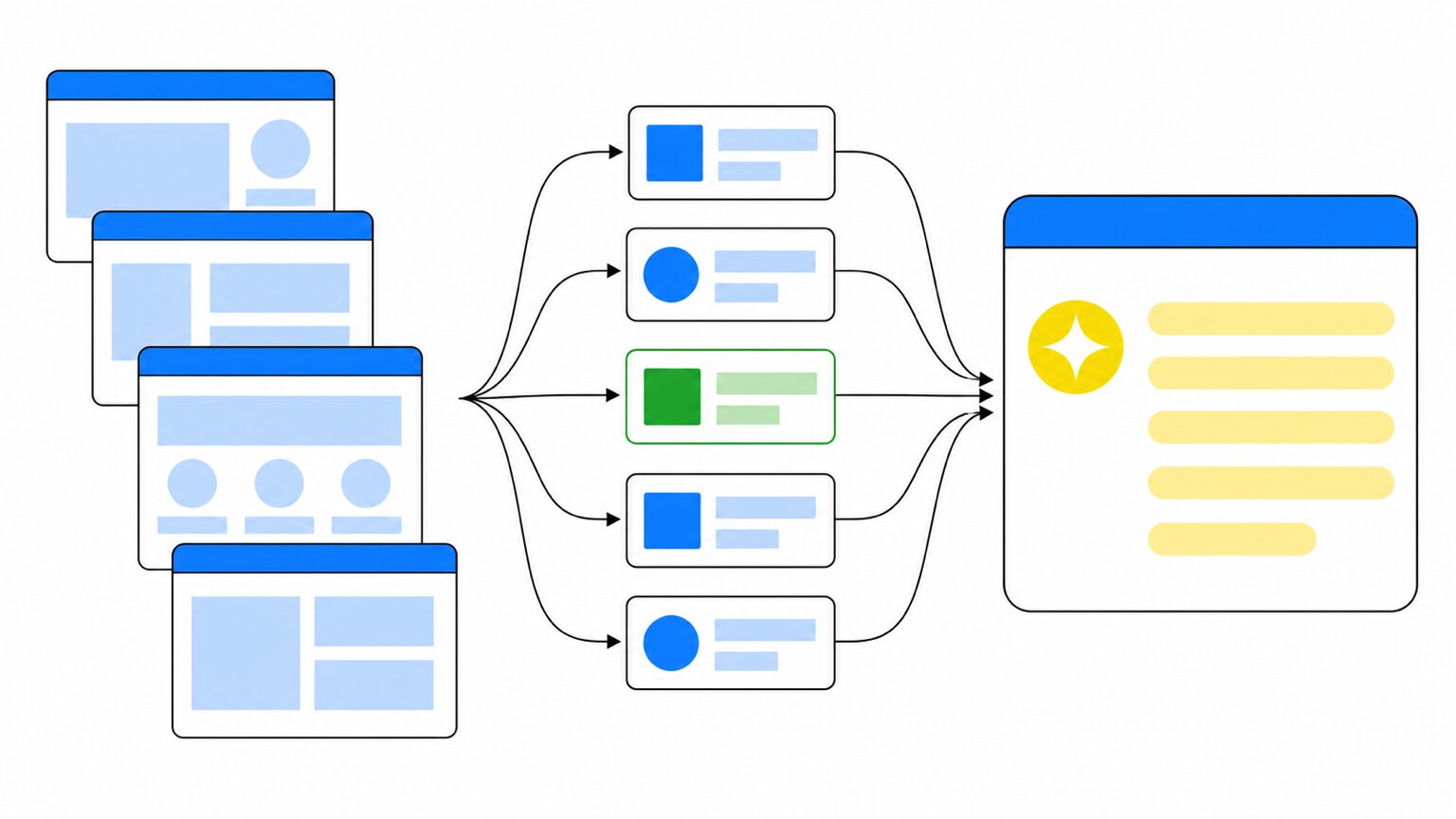
Igor’s main idea was that an AI answer does not simply promote one page. It tries to recognise an entity and assemble a useful account of that entity from multiple signals. A brand becomes easier to recommend when its public facts point to the same area of expertise, carry concrete evidence and make sense together.
This is why replacing Google keywords with chatbot phrases misses the point. Search advertising still has its own controls: Google documents keyword matching options, and broad match governs how widely an ad can meet relevant searches. Those mechanisms manage campaign reach. AI recommendation depends on whether the system can understand what the brand is known for and why that claim is credible.
The boundary also applies to exclusions. In advertising, negative keywords and Google’s negative-keyword guidance help prevent ads from serving on unwanted searches. They cannot create a coherent professional identity in an AI system. That requires consistent facts and evidence strong enough to survive synthesis across sources.
A clear problem and area of expertise in which the brand should be understood.
Concrete public facts that are varied in expression but coherent in meaning.
An AI system connects the evidence to the entity and can use it in a recommendation.
My principle for AI visibility
I do not treat it as a rewrite of SEO. I want public evidence to tell one coherent story about the work I do, while each fact adds something specific enough for an AI system to understand and reuse.
This distinction belongs in training because it changes the question from “Which phrase should we repeat?” to “What should the market be able to verify about us?” Our school examines that way of working as part of a broader evidence-led marketing practice.
A conference slot only fits the essentials. My e-book “19 Google Ads Secrets” shows how to get the most out of Google Ads without draining your budget, drawn from real campaigns and tests.
See the book →Key insights
- A recommendation changes the starting level of trust. Prospects who arrived after an AI recommendation were already warm and had framed a relevant need.
- The unit of visibility is the entity, not a single page. The system needs a coherent picture of a person or brand before it can explain why that entity fits a request.
- Facts matter more than generic expertise claims. Numbers, outcomes and specific credentials give an AI system material it can distinguish from another broad guide.
- Consistency does not require identical wording. Public descriptions can vary while still reinforcing the same professional identity.
- Timing is controlled partly by model updates. Igor could not request immediate indexing and saw the visible change after a major update.
- The case is evidence, not universal proof. It is a one-person before-and-after experiment whose business effect should be checked through repeated answers and traceable enquiries.
Key moments from the talk
The starting point: two generic lines
Igor began with a simple test in March 2024: he asked ChatGPT who he was. The answer recognised a Ukrainian mathematician with some Google expertise, but it did not capture the professional position he wanted a potential client to see. His summary was blunt: “Zero authority, zero recognition.” Instead of treating that answer as a reputation verdict, he treated it as a baseline. The business context made the gap consequential. His consultancy works with clients spending at least $1 million a year on advertising. They are experienced buyers who rarely respond to ordinary targeting, feeds or familiar sales claims. Years of pitches have trained them to question every assertion. If an AI system could not connect Igor’s name to a precise problem, the brand was absent at the moment when one of those buyers asked for a recommendation. The experiment therefore focused on recognition inside a narrowly relevant context, not on producing a flattering general biography.
Why an AI recommendation changes the conversation
Traditional advertising and AI recommendation created different openings in Igor’s experience. An ad introduced an unfamiliar seller, so the prospect’s first reaction was often scepticism. Credibility then had to be built from the beginning. A recommendation generated in response to the prospect’s own question arrived with context already attached. The person had described a budget, a challenge or a preference, and the system had returned a name that appeared to fit. Igor called this an instant transfer of credibility from the AI system. It did not close the sale, but it changed the first conversation. The lead was warmer because the initial problem definition had happened before contact. During the month described in the talk, dozens of prospects approached him with a version of the same explanation: “ChatGPT recommended you.” For a consultancy aimed at a small group of sophisticated buyers, that difference mattered more than raw exposure.
The strategic value is easy to misunderstand. The aim is not to make an AI say that a company is excellent. Generic praise carries little diagnostic value and can change from one answer to the next. The useful outcome is narrower: the right person asks about a real problem, and the system can connect that problem to a brand using specific, intelligible evidence. This also explains why Igor rejected courses that merely renamed SEO concepts. His instruction from the stage was “Forget about keywords.” He was not declaring search advertising obsolete. He was separating two jobs. Keywords help organise demand and campaign reach in a search-ad system. AI visibility asks whether scattered public information resolves into a stable identity, a recognised field of work and defensible reasons for a recommendation. The difference is between matching a query to a page and synthesising a person or brand for a decision.
What changed after a year
The experiment lasted about a year, and most of that period did not produce a dramatic visible change. Igor kept checking several AI systems and initially received versions of the same shallow answer. Unlike a page submitted through a search console, the material could not simply be pushed into an AI system on demand. The shift became visible after a major ChatGPT update: the answer expanded into a much richer professional account and began to support recommendations. That delay is part of the case, not an inconvenience to edit out. It means the work has an uncertain feedback cycle, and no one can responsibly promise a fixed time to recognition. It also makes monitoring essential. The meaningful checkpoints are not publication volume by itself, but whether neutral questions produce more accurate descriptions, whether the intended field of expertise is understood, and whether real prospects mention AI as the route by which they arrived.
The talk explained that Igor had built a five-part authority system, but the durable lesson sits above its mechanics. He first defined the knowledge territory in which he wanted to be recognised, then made the public evidence around his name deeper and more coherent. Facts across sources were meant to complement one another rather than turn every profile into the same slogan. Content was judged not only by whether a person might click it, but by whether it gave a model concrete material to connect with the entity. The result was the before-and-after demonstrated in the session: two generic lines at the start, a detailed account and relevant recommendations later, followed by dozens of warm enquiries in a month. This does not isolate the effect of every intervention from the effect of the model update. It does show a practical hypothesis worth testing: coherent, fact-rich evidence can improve how an AI system understands and recommends a specialised brand.
The full recording of this talk, including the five-part system, audit prompts and detailed audience discussion, is part of our bonus pack for students.
Key takeaways
In 12 months, Igor moved from two generic lines in an AI answer to detailed recognition, recommendations and dozens of warm enquiries.
The strategic lever was a coherent body of specific evidence around one professional identity, with results judged through AI answers and real inbound conversations.